
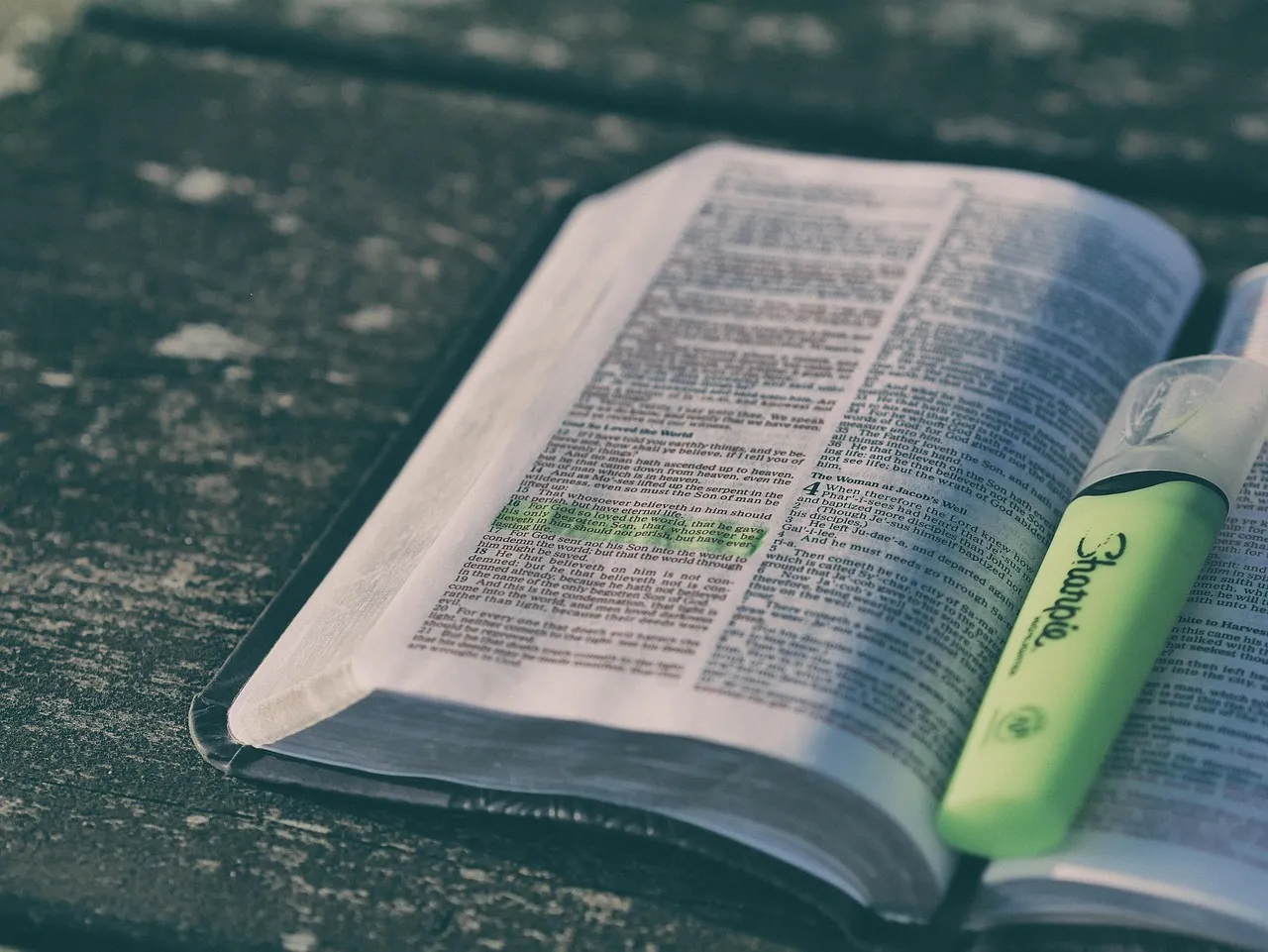
Most people read the Bible and hope something sticks. Inductive Bible study flips that approach. Instead of starting with a conclusion, you let the text speak for itself — and you follow where it leads. According to the American Bible Society's State of the Bible 2025 report, only 25% of American adults qualify as active Bible users — reading Scripture weekly or more. Yet those who use a structured study method report deeper comprehension and stronger habit retention than casual readers.
The inductive method is the most widely taught Bible study framework in evangelical seminaries, small group curricula, and parachurch organizations. You don't need a theology degree to use it. You need a Bible, a notebook, and three questions: What does it say? What does it mean? What should I do?
Key Takeaways
- Inductive Bible study follows three steps: Observe, Interpret, Apply (OIA) — in that order, never reversed.
- The method was popularized by Bible teacher Howard Hendricks and systematized by Kay Arthur of Precept Ministries.
- Observation is the most important and most skipped step — reading carefully before drawing conclusions.
- Inductive study works for any passage type: narrative, epistle, poetry, or prophecy.
- It is cross-denominational: used in Catholic, Protestant, and Orthodox study contexts worldwide.
- Small groups benefit most — the observation phase gives every participant equal access, no expertise required.
- You can practice inductive study with as little as 15 minutes and a single paragraph of text.
What Is Inductive Bible Study?
Inductive Bible study (IBS) is a three-phase approach to reading Scripture that moves from observation to interpretation to application. The word "inductive" comes from inductive reasoning — drawing general conclusions from specific evidence. In Bible study terms, this means you examine the text first, then form your understanding of what it means, then apply it to your life. The opposite — starting with a doctrine and finding verses to confirm it — is called the deductive approach.
The method gained wide recognition through Dallas Theological Seminary professor Howard Hendricks, whose book Living by the Book (1991, Moody Publishers) became one of the most-used inductive study textbooks in evangelical education. Around the same time, Kay Arthur co-founded Precept Ministries International in 1970, building an entire curriculum series — the Precept Upon Precept workbooks — around inductive principles. Today, Precept Ministries operates in nearly 190 countries with Kay Arthur's materials reaching tens of millions of readers worldwide.
Citation capsule: Inductive Bible study is a text-first methodology: you observe before you interpret, and interpret before you apply. This sequence guards against reading personal assumptions into the text — a risk that any honest Bible reader faces. The method's wide adoption across denominations reflects its dependence on the biblical text itself rather than any particular theological tradition.
Where Did the Inductive Method Come From?
The roots of inductive Bible study trace back further than the 20th century. The broader inductive approach to knowledge was championed by philosopher Francis Bacon in the 17th century as a counter to deductive scholasticism. Scholars began applying this same rigor to biblical texts in the 19th century as part of the historical-critical movement, though IBS as a devotional and pastoral method diverged significantly from that academic tradition.
The modern devotional form of IBS is closely associated with Wilbert Webster White, who founded what became New York Theological Seminary, opening in January 1901 in New Jersey before relocating to Manhattan — now New York Theological Seminary. White's emphasis on reading the Bible "book by book," observing literary structure, and drawing conclusions from the text itself laid the groundwork for the movement. His approach influenced a generation of Bible teachers who eventually brought inductive methods into seminaries, Bible colleges, and local churches across the English-speaking world.
Kay Arthur, whose Precept Ministries remains one of the most visible IBS organizations globally, describes the method as training readers to become "workmen who do not need to be ashamed" — a reference to 2 Timothy 2:15 (NKJV): "Be diligent to present yourself approved to God, a worker who does not need to be ashamed, rightly dividing the word of truth."
What Are the 3 Steps of Inductive Bible Study?
The three steps of inductive Bible study are Observation, Interpretation, and Application — always in that sequence.

Step 1: Observation — What Does the Text Say?
Observation is the foundation. Your goal in this phase is to read the passage carefully enough to notice details you would normally skip. Many readers rush to meaning before they've fully absorbed the words on the page.
Effective observation techniques:
- Read the passage multiple times. Read it in at least two translations. Read it aloud. Let the language settle.
- Ask the six journalist questions: Who is speaking? Who is the audience? What is happening? When is this taking place? Where does the action occur? Why and how does the author explain it?
- Mark key words and phrases. Note words that repeat. Circle terms of time ("then," "after," "when"). Underline commands and promises.
- Identify literary features. Look for contrasts ("but," "however"), comparisons ("like," "as"), lists, and cause-and-effect relationships ("therefore," "so that").
- Note what surprises you. If a verse feels odd or unexpected, mark it — that's often where the deeper meaning lives.
Example — Philippians 4:4–7 (ESV):
"Rejoice in the Lord always; again I will say, rejoice. Let your reasonableness be known to everyone. The Lord is at hand; do not be anxious about anything, but in everything by prayer and supplication with thanksgiving let your requests be made known to God. And the peace of God, which surpasses all understanding, will guard your hearts and your minds in Christ Jesus."
Observations: Paul is writing from prison (see Philippians 1:13). He repeats "rejoice" twice — intentional emphasis. He gives a direct command ("do not be anxious"), a prescribed substitute action (prayer with thanksgiving), and a specific promise (peace that guards the heart and mind).
Step 2: Interpretation — What Does the Text Mean?
Once you've observed carefully, interpretation asks: what did this text mean to its original audience, and what does it mean as Scripture?
Effective interpretation techniques:
- Consider the context. Read the verses before and after your passage. Then zoom out to the chapter and the whole book. Context protects you from misreading individual sentences.
- Identify the genre. A psalm is poetry — it uses images and hyperbole. An epistle is a letter — it addresses a specific situation. A narrative is history — it shows more than it explains. Genre shapes meaning.
- Look at cross-references. What do other parts of the Bible say about the same theme? Scripture often interprets Scripture.
- Check the historical and cultural background. Who was the original audience? What would these words have meant to them? A Bible dictionary or a one-volume commentary helps here.
- State the principle. Summarize the passage in one timeless sentence that applies beyond the original situation.
Continuing Philippians 4:4–7: Paul writes from prison — his "rejoice" is not naive optimism. The phrase "the Lord is at hand" signals both God's nearness and the early church's expectation of Christ's return. The command to pray "with thanksgiving" implies gratitude as a condition of receiving peace, not a result of it. The principle: Anxiety is addressed not by suppressing worry but by redirecting it into grateful prayer.
Step 3: Application — What Should I Do?
Application is where Bible study becomes life change. This step moves from understanding the text to responding to it. Application is always personal, specific, and measurable. In our experience guiding small group study, this is the step most people skip — and the step that matters most.
Effective application techniques:
- Bridge from the principle to your life. Given the timeless principle you identified, what does it demand from you right now?
- Make it specific. "I will pray more" is not an application. "I will write down three specific anxieties and pray through them before I check my phone each morning" is an application.
- Set a timeframe. Vague intentions don't stick. Give your application a deadline: this week, today, in the next conversation.
- Identify one action. Don't try to apply everything. One concrete change beats five intentions.
- Return to it. At the end of the week, check: did you do it? What happened?
Continuing Philippians 4:4–7: Application: This week, when I feel anxious about a specific situation at work, I will stop and write down exactly what I am worried about. I will then pray through each item, thanking God for something related to the situation — even if it's small — before asking for help. I will do this for five days and note any change in how I feel.
How Does Inductive Bible Study Compare to Other Methods?
| Method | Focus | Steps | Best For | Tradition |
|---|---|---|---|---|
| Inductive (OIA) | Text → meaning → response | Observe, Interpret, Apply | Deeper study, small groups, structure | Cross-denominational |
| SOAP | Simplified devotional | Scripture, Observation, Application, Prayer | Daily quiet time, journaling | Evangelical, Charismatic |
| Lectio Divina | Contemplative prayer | Read, Meditate, Pray, Contemplate | Spiritual formation, prayer retreat | Catholic, Orthodox, Anglican |
| Topical Study | Theme or doctrine | Find verses, compare, synthesize | Theological questions, sermon prep | Cross-denominational |
| Deductive | Doctrine → proof | Start with conclusion, find support | Teaching a known doctrine | Reformed, Catholic scholastic |
For a broader overview of these approaches, see our guide to Bible study methods.
Each method serves a different purpose. SOAP is faster and better suited for daily journaling. Lectio Divina prioritizes encounter over analysis. Inductive Bible study stands apart because it trains your eye to see the text as it actually is — a discipline that improves every other method you use.
What Passage Should You Start With?
Not every passage works equally well as an introduction to inductive study. Highly symbolic apocalyptic texts (like Revelation or Daniel) require significant background knowledge before observation is productive. Dense doctrinal arguments (like Romans 9–11) can overwhelm a first-time inductive reader.
Good starting passages for inductive Bible study:
- Philippians 4:4–7 — short, emotionally accessible, rich with literary features
- John 3:1–21 — narrative with dialogue, clear contrast between Nicodemus and Jesus
- Psalm 23 — poetic but concrete imagery, widely known
- James 1:2–18 — practical epistle, strong cause-and-effect structure
- Luke 10:25–37 (The Good Samaritan) — narrative parable with clear observation and application layers
If you're new to reading Scripture regularly, our guide on building a Bible reading habit walks through how to establish the rhythm before diving into structured study.
Can You Use Inductive Bible Study in a Group?
Inductive Bible study is particularly effective in a group setting — and this is one of its underappreciated strengths. Because the observation phase requires only the text (no prior theological training), every participant starts on equal footing. A longtime churchgoer and a brand-new believer can both observe what the text says. This creates genuine discussion rather than a lecture dynamic.
Group inductive study works best when:
- Everyone reads the passage before meeting. Observation homework done individually makes group discussion richer.
- The facilitator asks open-ended observation questions. "What did you notice?" not "What does this mean?"
- The group moves through OIA in sequence. Don't jump to application before you've interpreted.
- Applications are shared, not assigned. Each person's application will differ — and that's appropriate.
For practical tips on leading a study group, see our guide to running a Bible study group.
Bible teacher Howard Hendricks emphasized that community accountability turns application from intention into action: "Observation + Interpretation without Application equals sterile intellectualism. Application without Observation and Interpretation equals distorted subjectivism" (Living by the Book, Moody Publishers, 1991).
What Tools Do You Need for Inductive Bible Study?
You need very little to begin. The method was designed to be text-first — meaning the primary tool is the biblical text itself.
Minimum toolkit:
- A Bible in a readable translation (ESV, NIV, CSB, or NRSV are widely used for study)
- A notebook and pen — or a notes app
- Colored highlighters or pens for marking (optional but helpful)
Optional tools that help:
- A second translation for comparison (comparing ESV to NIV, for example, often surfaces interpretive questions worth exploring)
- A Bible dictionary (Vine's Expository Dictionary, Mounce's Complete Expository Dictionary)
- A one-volume Bible commentary (the ESV Study Bible notes, the NIV Biblical Theology Study Bible)
- A Bible atlas for geographical context in narrative passages
What you don't need: a seminary degree, a specific denomination, or any prior experience. The how to study the Bible guide covers the foundational reading habits that make any method — including inductive — more productive.
For digital study, the Bible Expert app provides AI-assisted Bible search, cross-reference lookup, and translation comparison that support the interpretation phase without requiring multiple physical books.
Frequently Asked Questions
What are the three steps of inductive Bible study? The three steps are Observation (what does the text say?), Interpretation (what does it mean?), and Application (what should I do in response?). The order matters — you must observe before you interpret, and interpret before you apply.
Who invented inductive Bible study? The modern devotional form was pioneered by Wilbert Webster White, who founded what became New York Theological Seminary, opening in January 1901 in New Jersey before relocating to Manhattan. Howard Hendricks of Dallas Theological Seminary popularized it with Living by the Book (1991). Kay Arthur of Precept Ministries built the most widely used IBS curriculum, now taught in nearly 190 countries.
How long does inductive Bible study take? A basic OIA study of a short passage (4–8 verses) takes 15–30 minutes. A more thorough study of a whole chapter, including cross-references and background research, can take 60–90 minutes. You can scale the depth to the time you have.
Is inductive Bible study only for Protestants? No. While IBS is most common in evangelical Protestant contexts, the underlying principles — careful reading, contextual interpretation, personal response — are practiced across Catholic, Orthodox, and Anglican study traditions. The specific OIA framework is cross-denominational.
What is the difference between inductive and deductive Bible study? Inductive study starts with the text and draws conclusions from it. Deductive study starts with a doctrine or conclusion and looks for supporting verses. IBS is text-first; deductive study is thesis-first. Both have legitimate uses, but IBS is less vulnerable to proof-texting.
What's the difference between inductive Bible study and SOAP? SOAP (Scripture, Observation, Application, Prayer) is a simplified adaptation of inductive principles designed for daily journaling. It's faster and more devotional in tone. Inductive study goes deeper — especially in the interpretation phase, where SOAP spends less time. Think of SOAP as inductive study's faster, more personal sibling.
Can I do inductive Bible study without a study Bible? Yes. The method requires only your Bible and a notebook. A study Bible's notes can help with interpretation, but they should be consulted after your own observation — not before — so they don't replace your own engagement with the text.
What's a good book to learn inductive Bible study? Living by the Book by Howard Hendricks (Moody Publishers, 1991, updated 2007) is the most widely recommended introduction. Kay Arthur's How to Study Your Bible (Harvest House Publishers) is a more workbook-oriented option. Both are available in print and digital formats.
📱 Read the Bible anywhere with Bible Expert 1,200+ translations, audio Bible, and AI Bible Chat — free. iPhone / iPad · Mac · Android · Windows · Other device
About the author: Julien is a Bible teacher and curriculum writer with over a decade of experience leading inductive Bible study groups in evangelical and interdenominational settings. She holds a Master of Arts in Biblical Studies and writes on practical Scripture engagement for everyday readers.