
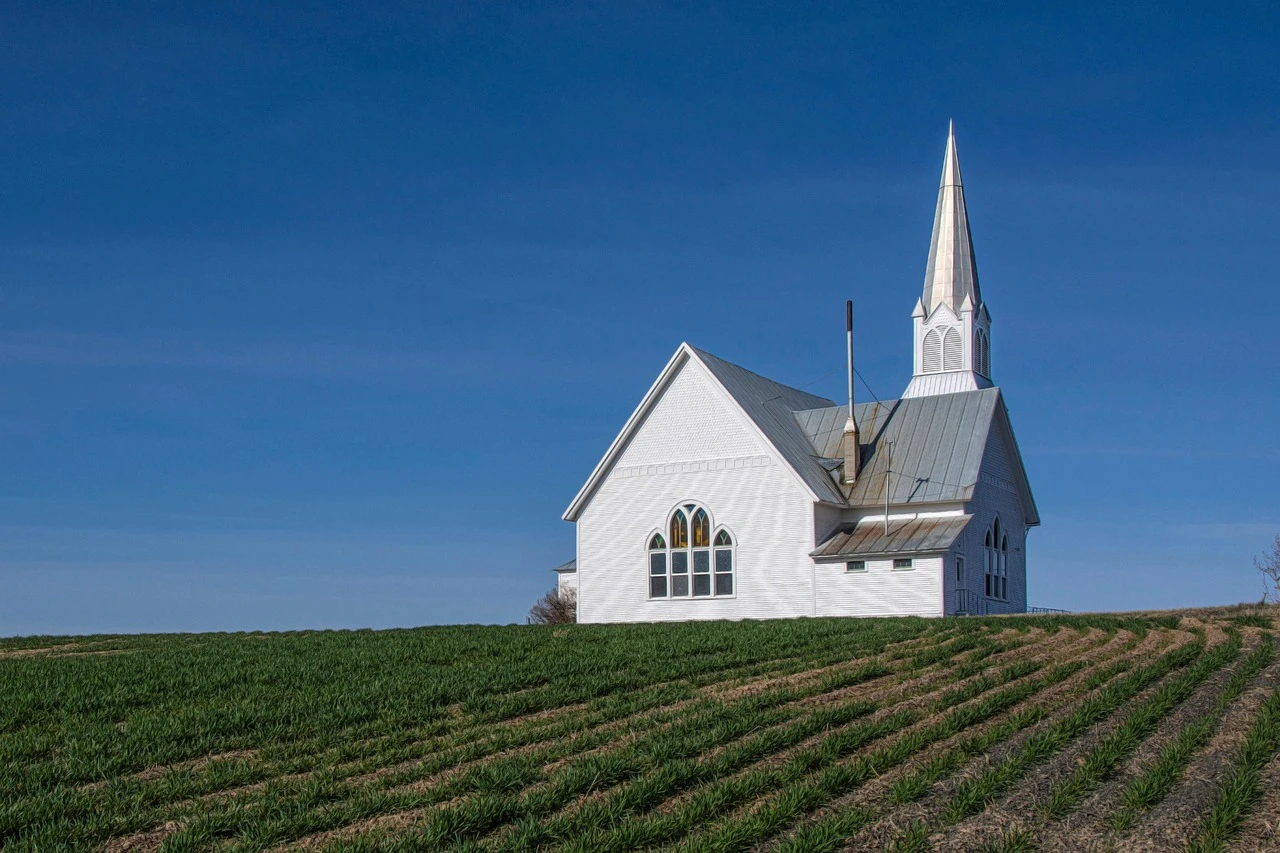
What does it actually mean to live as a Christian — not in theory, but on a Tuesday morning?
In our editorial experience, the question "How do I actually live as a Christian?" is one of the most common — and most honest — questions we encounter from readers across traditions. The earliest description we have comes from Acts 2:42 (NIV): "They devoted themselves to the apostles' teaching and to fellowship, to the breaking of bread and to prayer." Four things. Teaching. Fellowship. Eucharist. Prayer. That picture — from the first Christian community in Jerusalem — remains the template two thousand years later, even as it looks different across Catholic, Protestant, and Orthodox traditions.
According to Pew Research Center's 2023-24 Religious Landscape Study, 44% of U.S. adults say they pray daily, and 22% say they read Scripture at least once a week. Yet many Christians who hold faith as central to their identity still feel uncertain about what a practicing Christian life actually looks like in practice.
This guide covers the core elements of Christian living — prayer, Scripture, community, service, spiritual disciplines, work, family, suffering, and growth — drawing on Catholic, Protestant, and Orthodox perspectives. It's not prescriptive: Christian living looks different in every tradition and every season of life. But the foundations are more shared than they are different.
Key Takeaways
- Christian living is rooted in four practices described in Acts 2:42 (NIV): teaching, fellowship, breaking of bread (Eucharist), and prayer
- A sustainable Christian life builds on daily habits — especially regular prayer and Scripture reading — rather than occasional spiritual intensity
- According to Pew Research (2023-24), 44% of U.S. adults pray daily; building your own sustainable rhythm matters more than any single method
- The "fruit of the Spirit" (Galatians 5:22–23 NIV) — love, joy, peace, patience, kindness, goodness, faithfulness, gentleness, self-control — is the clearest biblical description of what Christian character looks like in practice
- Christian living is not about perfectionism; Romans 12:2 (NIV) describes it as a process: "the renewing of your mind"
- Catholic, Protestant, and Orthodox traditions differ significantly in how they structure spiritual life — but all three emphasize prayer, Scripture, community, and service
- Suffering is addressed directly in Christian teaching as a context where faith deepens, not a sign that faith has failed
- You don't live the Christian life alone — community (the local church, small groups, spiritual direction) is not optional decoration; it's structural
What Does It Mean to "Live as a Christian"?
Living as a Christian means living in conscious relationship with God, shaped by Jesus's teaching and character, sustained by spiritual practices, and expressed in how you treat others.
The Apostle Paul's description in Romans 12:1–2 (NIV) is one of the most comprehensive summaries: "Therefore, I urge you, brothers and sisters, in view of God's mercy, to offer your bodies as a living sacrifice, holy and pleasing to God — this is your true and proper worship. Do not conform to the pattern of this world, but be transformed by the renewing of your mind."
Three things stand out in that passage. First, the entire life — not just Sunday morning — is considered "worship." Second, the Christian life involves counter-cultural habits that resist the default values of surrounding culture. Third, it's a process ("be transformed") — not a one-time achievement or a perfection to perform.
Citation capsule: The Second Vatican Council's Lumen Gentium (1964) described the universal call to holiness: all baptized Christians — not just priests and religious — are called to the fullness of Christian life and to the perfection of charity. This "universal call to holiness" is echoed across traditions: in Protestant sanctification theology, in Orthodox theosis (the process of becoming more like God), and in Evangelical discipleship frameworks. Source: Vatican.va, Lumen Gentium, Chapter V
How Do You Build a Daily Prayer Life?
Prayer is the heartbeat of Christian living — and the practice most Christians find both essential and difficult to sustain.
The New Testament is full of prayer imperatives: "Pray without ceasing" (1 Thessalonians 5:17 ESV). "Do not be anxious about anything, but in every situation, by prayer and petition, with thanksgiving, present your requests to God" (Philippians 4:6 NIV). Jesus himself withdrew regularly to solitary places to pray (Luke 5:16 NIV), and his disciples specifically asked him to teach them to pray (Luke 11:1).
The good news: no tradition requires perfection. Even a five-minute morning prayer habit, practiced consistently, is more formative than an hour-long session attempted occasionally and abandoned from guilt.
What to pray: The Lord's Prayer (Matthew 6:9–13) is the template Jesus gave his disciples. Most traditions use it either verbatim (many liturgical churches pray it daily at Morning and Evening Prayer) or as a structural model: praise, submission to God's will, petition for provision, forgiveness, and protection from evil.
The ACTS method — Adoration, Confession, Thanksgiving, Supplication — is a widely used Protestant framework for structuring personal prayer. It prevents prayer from collapsing entirely into requests. Learn more in our guide to the ACTS prayer method.
Catholic and Orthodox structure: Many Catholics pray the Liturgy of the Hours (the Divine Office) — a structured cycle of psalms, readings, and canticles prayed at set hours of the day, organized in The Breviary. Orthodox Christians use a similar Daily Office from the Horologion. Both traditions make the Psalms the backbone of daily prayer — a practice with roots in the Jerusalem Temple and the earliest Christian communities.
Citation capsule: Pew Research Center's 2025 prayer data confirms that Americans pray for a wide range of reasons — thanksgiving, requests for help, and intercession for others — a pattern that closely mirrors the structure of the ACTS method across traditions.
How Do You Read the Bible Consistently?
Scripture reading is the second pillar of Christian living — the discipline of letting God's word shape your thinking, desires, and decisions.
The Reformers summarized their vision of the Christian life with the phrase sola Scriptura (by Scripture alone), meaning Scripture is the supreme authority for Christian faith. But reading the Bible regularly isn't just a Protestant concern: Catholic liturgy saturates the Mass with Scripture (every Mass includes readings from the Old Testament, Psalms, New Testament, and a Gospel passage), and Orthodox worship is almost entirely composed of biblical texts.
How to start: The most sustainable approach for a new reader is a structured reading plan. A "reading through the New Testament in 30 days" plan requires only 10–15 minutes a day. Longer plans (reading the full Bible in a year) typically require 15–20 minutes daily.
What to read: Most Bible teachers suggest beginning with the Gospels — particularly Mark (the shortest) or John — rather than Genesis. The Gospels put Jesus at the center immediately. From there, Acts, Psalms, Romans, and Proverbs are typically recommended as a starting cluster.
How to engage: The ancient practice of Lectio Divina (Latin: "sacred reading") — reading slowly, pausing on words that resonate, sitting with the text in silence, and praying back what you've heard — is practiced across Catholic, Protestant, and Orthodox traditions and remains one of the most effective methods for devotional reading. See our full guide to Lectio Divina for beginners.
Using multiple translations: Reading the same passage in two different translations — for example, the ESV (formal equivalence) alongside the NLT (dynamic equivalence) — often reveals nuances you'd miss in either alone. Bible Expert's side-by-side comparison lets you do this with over 1,200 translations instantly.
Why Is Christian Community Not Optional?
Christian community — the local church, small groups, fellowship with other believers — is structural to the Christian life, not an add-on for those who like people.
The New Testament assumes community. The Greek word ekklesia (usually translated "church") literally means "the called-out assembly" — it's always a plural noun. Nearly every command in Paul's letters is addressed to communities, not isolated individuals: "love one another," "bear one another's burdens," "forgive one another," "encourage one another" (Galatians 6:2, Ephesians 4:32, 1 Thessalonians 5:11 NIV). These are structurally impossible to obey alone.
According to Gallup's research on religion and wellbeing, people who practice their faith regularly report substantially higher wellbeing across multiple dimensions — including social relationships, purpose, and emotional health — compared to those who identify religiously but attend rarely.
What does community look like in practice?
- Weekly worship — the gathering of the local church around Word and Sacrament (or Word and prayer, in traditions without a formal sacramental theology) is the primary form of Christian community across all traditions
- Small groups — regular small-group Bible study or discipleship groups provide the relational accountability that large gatherings cannot
- Spiritual direction — the practice (most developed in Catholic and Orthodox traditions, but growing in Protestant contexts) of meeting regularly with a trained spiritual director to reflect on your prayer life and spiritual growth
- Service together — shared service to those in need is both a expression of faith and a builder of community; it puts theology into action
What Does Service Have to Do With Christian Living?
Service — caring for others, especially the poor and vulnerable — is not an extra credit activity for advanced Christians. It's at the center of Jesus's description of the Final Judgment in Matthew 25:31–46 (NIV): "For I was hungry and you gave me food, I was thirsty and you gave me drink, I was a stranger and you welcomed me."
The prophets were even more emphatic. Isaiah 58:6–7 (NIV) describes the "fast that God has chosen" as: "to loose the chains of injustice ... to share your food with the hungry and to provide the poor wanderer with shelter."
James 2:17 (NIV) makes the logic unavoidable: "Faith by itself, if it is not accompanied by action, is dead."
Citation capsule: Pope Francis's 2013 apostolic exhortation Evangelii Gaudium describes service to the poor not as one option among many but as central to the Christian identity: "Each individual Christian and every community is called to be an instrument of God for the liberation and promotion of the poor, and for enabling them to be fully a part of society." Source: Vatican.va, Evangelii Gaudium, §187
How service connects to spiritual growth: Most traditions note a feedback loop — service transforms the servant. Helping others pulls you out of self-absorption, confronts you with perspectives very different from your own, and creates the conditions for gratitude and generosity to grow. Many people trace their deepest spiritual experiences not to worship services, but to serving in a soup kitchen, visiting someone sick, or sitting with someone dying.
What Are the Main Spiritual Disciplines?
Spiritual disciplines are structured practices that train the soul — creating the conditions for growth in character, virtue, and relationship with God. They're not a way to earn God's favor; they're a way to make yourself available to transformation.
The table below compares the major spiritual disciplines across three Christian traditions:
| Spiritual Discipline | Catholic Tradition | Protestant Tradition | Orthodox Tradition |
|---|---|---|---|
| Prayer | Liturgy of the Hours, Rosary, lectio divina, contemplative prayer | Personal prayer, ACTS method, prayer journals, corporate worship | Daily Office (Horologion), Jesus Prayer, hesychasm (inner stillness) |
| Scripture | Lectio divina, Mass readings (3-year cycle), Bible study | Daily personal reading, Bible study groups, expository preaching | Daily Scripture in liturgy (Typika), patristic commentary |
| Fasting | Fridays (abstinence), Lent (Ash Wednesday, Good Friday), Advent | Voluntary, individual — Daniel Fast popular; no fixed calendar for most | Most rigorous: four fasting periods per year (40 days each for Lent, Apostles' Fast, etc.) |
| Giving | Tithing, almsgiving (almsgiving as a Lenten discipline), charities | Tithing (10% income), freewill offerings, generosity as lifestyle | Almsgiving as penance and thanksgiving; strong monastic tradition of radical poverty |
| Silence/Solitude | Contemplative prayer, retreat centers, Carmelite tradition | Quiet times, spiritual retreats, Quaker silent worship | Desert Fathers tradition, hesychasm, monastic withdrawal |
| Community | Parish community, sacraments, religious orders | Small groups, accountability partners, Sunday congregation | Parish life, pilgrimage, strong monastic and lay community ties |
For a detailed guide to spiritual formation, see our article on how to study the Bible and the inductive Bible study method.
How Does Christian Faith Shape Work and Daily Life?
Jesus's summary of the Law — "Love the Lord your God with all your heart and with all your soul and with all your mind" and "Love your neighbor as yourself" (Matthew 22:37–39 NIV) — was not meant to apply only in churches. It was meant to shape everything: how you treat a difficult coworker, how you handle money, how you speak to your children, how you react when someone cuts you off in traffic.
The New Testament is surprisingly practical about work. Colossians 3:23–24 (NIV): "Whatever you do, work at it with all your heart, as working for the Lord, not for human masters." This verse was radical in its original context — it was addressed to slaves. It says that even menial work, done with integrity and full effort, has dignity before God.
Luther's doctrine of vocation (German: Beruf, "calling") extended this insight: every legitimate form of work — farmer, baker, parent, teacher — is a calling through which Christians serve their neighbors and honor God. This concept is foundational to most Protestant understandings of work. Catholic Social Teaching developed a parallel vision through the concept of human dignity in labor, most fully articulated in Leo XIII's encyclical Rerum Novarum (1891) and John Paul II's Laborem Exercens (1981).
In practice:
- Bring integrity to your work, even when no one is watching
- Treat colleagues — especially those with less power than you — with respect
- Hold financial success and possessions loosely (Matthew 6:19–21 NIV; 1 Timothy 6:6–10 NIV)
- Use your skills in service of others, not only in service of your career
How Does the Christian Life Address Suffering?
Christianity does not promise a suffering-free life. What it offers is a framework for understanding suffering and a presence in it.
Jesus was explicit: "In this world you will have trouble. But take heart! I have overcome the world." (John 16:33 NIV). Paul describes his own experience with unrelenting hardship in 2 Corinthians 11:24–28 — shipwrecks, beatings, imprisonment, hunger. Yet he writes in the same letter: "We are hard pressed on every side, but not crushed; perplexed, but not in despair" (2 Corinthians 4:8 NIV).
James 1:2–4 (NIV) goes further: "Consider it pure joy, my brothers and sisters, whenever you face trials of many kinds, because you know that the testing of your faith produces perseverance. Let perseverance finish its work so that you may be mature and complete, not lacking anything."
Citation capsule: The Orthodox theology of theosis (Greek: θέωσις, "deification" — the process of becoming more like God through union with him) holds that suffering, when received with faith, is a primary means of sanctification. This doesn't glorify suffering for its own sake, but sees it as the forge where character is shaped. Source: Orthodox Church in America, "The Orthodox Faith — Spirituality"
Three things Christian teaching says about suffering:
- God is present in it — Psalm 23:4 (NIV): "Even though I walk through the darkest valley, I will fear no evil, for you are with me."
- It can produce growth — but this doesn't mean suffering is automatically good or that you should seek it
- You don't have to face it alone — the community of the church exists in part to bear burdens together (Galatians 6:2 NIV)
If you're in a season of deep suffering, your pastor, priest, or a trained counselor is the right companion — not just an article.
What Does Spiritual Growth Actually Look Like?
Spiritual growth in Christian tradition is not a performance or a progression from "basic Christian" to "advanced Christian." It's described throughout the New Testament as a process of increasing resemblance to the character of Jesus.
Galatians 5:22–23 (NIV) gives the clearest description of what that character looks like: "But the fruit of the Spirit is love, joy, peace, forbearance, kindness, goodness, faithfulness, gentleness and self-control." Notice that these are all relational and character qualities — not spiritual experiences, doctrinal knowledge, or church attendance metrics. Spiritual growth shows in how you treat people.
Paul describes his own ongoing process in Philippians 3:12–14 (NIV): "Not that I have already obtained all this, or have already arrived at my goal, but I press on to take hold of that for which Christ Jesus took hold of me." If Paul could write that, it's safe to assume no one else has "arrived" either.
Practical markers of growth:
- Your first reaction to a difficult person becomes less hostile over time
- Gratitude becomes a more consistent posture than entitlement
- You find yourself less driven by fear of what others think
- Forgiveness becomes something you extend more readily (see our guide on biblical forgiveness)
- Prayer feels less like a duty and more like a conversation
How Do Catholic, Protestant, and Orthodox Christians Live Differently?
All three traditions share the foundations described above. But the structures look meaningfully different — and understanding those differences helps you make sense of what you encounter.
| Dimension | Catholic | Protestant | Orthodox |
|---|---|---|---|
| Central act of worship | Mass (Eucharist at center) | Sunday service (preaching often central) | Divine Liturgy (Eucharist, icons, chant) |
| Scripture access | Lectionary (3-year cycle), daily Mass readings | Personal Bible reading emphasized; Sunday exposition | Liturgical Scripture (nearly all of NT in a year) |
| Sacraments | 7 sacraments (Baptism, Eucharist, Confirmation, Reconciliation, Anointing, Marriage, Holy Orders) | 2 sacraments (Baptism, Lord's Supper) or none (Quakers, some Charismatics) | 7 Holy Mysteries (similar to Catholic, different theology) |
| Confession/Reconciliation | Sacrament of Reconciliation with a priest; required for mortal sin | Confession to God directly; to another person as an act of accountability (not sacramental) | Confession to a priest; strong emphasis on regular confession |
| Fasting | Fridays (abstinence); Lent; Advent (in some forms) | Largely voluntary; no fixed calendar | Most rigorous: four fasting seasons, Wednesdays and Fridays |
| Devotion to Mary/Saints | Mary and saints as intercessors; rosary; veneration | Varies: some honor saints historically; no veneration or prayers to saints in most Protestant traditions | Strong: Theotokos (Mary as God-bearer) central; extensive saints' calendar |
| Spiritual direction | Formal tradition; trained spiritual directors | Growing; less formal; accountability partners common | Strong monastic tradition; starets (elder) as spiritual guide |
No tradition is "better" — each reflects different emphases within the same apostolic faith. A Catholic will experience the Christian life primarily through sacramental rhythm; a Baptist primarily through preaching and personal conviction; an Orthodox Christian primarily through the liturgical cycle and theosis.
How Do You Start (or Restart) Living the Christian Life?
Whether you're brand new to faith or returning after years away, the starting point is the same: don't wait until you feel ready.
Begin where you are. Pick one practice and do it consistently for 30 days before adding another. Many people start with a short daily prayer (even five minutes in the morning) or a simple Bible reading plan (one chapter of Mark per day). Consistency beats intensity.
Find a community. Try a local church — or several — before committing. Attend regularly enough to see if the teaching is sound, the people are real, and the community reaches outward, not just inward. If you're returning to faith, consider telling one person: a pastor, a priest, a trusted friend who believes.
Be patient with yourself. Romans 12:2 describes Christian living as "the renewing of your mind" — present tense, ongoing. It takes time. Every honest Christian will tell you the same thing: they are a work in progress.
Bible Expert's AI Bible Chat is designed for exactly this kind of exploratory stage — you can ask questions about any passage, any doctrine, or any practice and receive source-grounded answers from across traditions. It's not a replacement for a spiritual community, but it can help you form your questions and find your footing.
Frequently Asked Questions
What does it mean to live as a Christian?
Living as a Christian means living in a conscious relationship with God through Jesus Christ, shaped by Scripture, sustained by prayer and community, and expressed in how you treat others. It's a process of transformation described in Romans 12:1–2 as "the renewing of your mind."
What are the core practices of Christian living?
Acts 2:42 describes the earliest Christian community as devoted to four things: the apostles' teaching (Scripture), fellowship (community), breaking of bread (Eucharist), and prayer. These four remain the core across Catholic, Protestant, and Orthodox traditions today.
Do you have to go to church to be a Christian?
Most Christian traditions hold that the local church community is essential, not optional. The New Testament's commands — "love one another," "bear one another's burdens" — are structurally impossible to fulfill alone. That said, the form of church community varies widely across traditions.
What is the fruit of the Spirit?
The fruit of the Spirit (Galatians 5:22–23 NIV) is love, joy, peace, patience, kindness, goodness, faithfulness, gentleness, and self-control. In Christian teaching, these character qualities grow gradually as a person lives in relationship with the Holy Spirit — they are the natural result of that relationship, not achievements to produce through effort alone.
How do you pray as a Christian?
There is no single right way to pray. Jesus gave the Lord's Prayer as a template (Matthew 6:9–13). The ACTS method (Adoration, Confession, Thanksgiving, Supplication) gives a helpful structure. Many Catholics and Orthodox Christians pray structured daily offices using the Psalms. The most important thing is consistency: even five minutes daily, every day, is more formative than occasional long sessions.
How does Christian living differ across Catholic, Protestant, and Orthodox traditions?
All three traditions share the same foundations (prayer, Scripture, community, service). The structures differ: Catholics and Orthodox Christians have more liturgically structured lives organized around sacraments and fasting seasons; most Protestant traditions emphasize personal Bible reading, individual prayer, and preaching. None of these differences affect the core call to love God and neighbor.
What does the Bible say about suffering?
The Bible does not promise Christians a trouble-free life. Jesus explicitly warned of trouble (John 16:33). James 1:2–4 describes trials as the source of perseverance and maturity. The consistent biblical witness is that God is present in suffering and that it can be a means of growth — but Christianity doesn't glorify suffering or require you to pretend pain isn't real.
How do I grow spiritually as a Christian?
Spiritual growth in Christian teaching is primarily about growing in the character qualities described in Galatians 5:22–23 (the fruit of the Spirit). It happens through regular prayer, Scripture engagement, community accountability, service, and willingness to be honest about failure. It is a process, not a destination — even the Apostle Paul described himself as still pressing forward (Philippians 3:12).
Is there a simple way to start the Christian life today?
Begin with one small, consistent habit: a brief daily prayer or a short daily Bible reading. Find a local church community and attend regularly. Be patient — Christian living is described throughout the New Testament as an ongoing process of transformation, not a one-time event. For personal spiritual guidance, connect with a pastor, priest, or spiritual director in your tradition.
About the Author
Julien is the lead writer at Bible Expert, focusing on practical Christian living, spiritual formation, and making the resources of the Christian tradition accessible to beginners and returning believers. She writes from a non-denominational perspective, drawing equally on Catholic, Protestant, and Orthodox scholarship and practice.
For personal guidance in your spiritual journey, she encourages you to connect with a pastor, priest, spiritual director, or a trusted community of faith. This article is educational, not pastoral counsel.
📱 Read the Bible anywhere with Bible Expert 1,200+ translations, audio Bible, and AI Bible Chat — free. iPhone / iPad · Mac · Android · Windows · Other device