

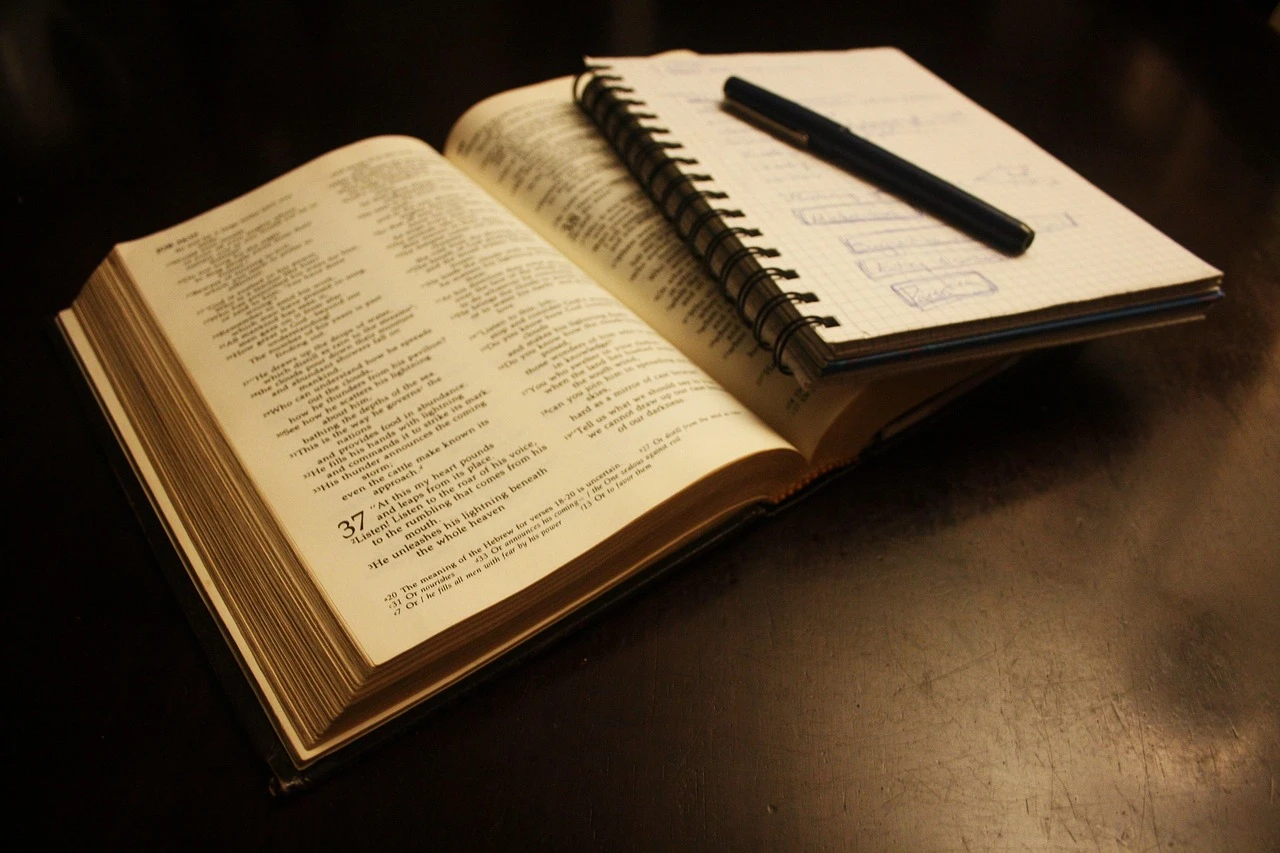
Writing your prayers down is one of the most transformative habits you can build as a Christian. It turns fleeting thoughts into lasting conversations with God — and over time, into a record of answered prayers you can look back on with wonder.
Key Takeaways
- A prayer journal is a written record of your conversations with God — gratitude, requests, Scripture reflections, and responses.
- Prayer journaling differs from Bible journaling (notes on Scripture study) and general spiritual journaling (broader reflection).
- The ACTS structure — Adoration, Confession, Thanksgiving, Supplication — gives beginners a clear framework.
- Paper notebooks and digital apps both work. What matters most is consistency, not the format.
- Short, honest entries matter more than long, polished ones. God values authenticity over eloquence.
- Every Christian tradition — Catholic, Protestant, Orthodox, Evangelical — has rich journaling practices you can draw from.
- Starting with just five minutes a day is enough to build a lasting habit.
What Is a Prayer Journal — and Why Does It Help?
A prayer journal is a written record of your conversations with God. It captures what you bring to Him — your gratitude, your requests, your confusion — and what He seems to say back through Scripture and daily life. A 2025 narrative review in Spirituality in Clinical Practice found that spiritual practices — including written prayer and journaling — are associated with reduced anxiety and stronger sense of meaning for regular practitioners.
When you write your prayers, you slow down. You move from vague worry to specific words. That shift alone can change how you pray. Many people discover patterns they'd never noticed — recurring fears, repeated answered prayers, or themes God keeps bringing up in their life.
Citation capsule: Prayer journaling is described as "examen" (a structured self-examination before God) in Ignatian spirituality, dating to St. Ignatius of Loyola's Spiritual Exercises (1548). The practice encourages noticing where God moved in your day — an accessible form of contemplative prayer for any Christian.
Prayer Journaling vs. Bible Journaling vs. Spiritual Journaling
These three practices overlap, but each has a distinct focus. Prayer journaling centers on your dialogue with God — what you bring, what He gives. Bible journaling (sometimes called illustrated Bible journaling) focuses on your personal response to Scripture — notes, highlights, or artwork within the Bible's margins. Spiritual journaling is broader, covering any reflection on your faith journey, doubts, or growth.
You don't have to pick just one. Many people combine all three naturally. For a deeper dive into Scripture-focused journaling, see our guide to Bible journaling.
Citation capsule: The Desert Fathers and Mothers of early Christianity (3rd–5th century) kept written records of their spiritual struggles and insights. These "apophthegmata" (sayings of the desert elders) became foundational texts — proof that written spiritual reflection has deep roots in Christian history.

Choosing Your Format: Paper vs. Digital
Both paper notebooks and digital tools work well for prayer journaling — and neither is more "spiritual" than the other. Research on handwriting and brain connectivity (Van der Meer & Van der Weel, Frontiers in Psychology, 2023) found that handwriting produces significantly more widespread brain connectivity than typing, which may help written prayers feel more personal and retained. But a phone app you actually open beats an empty notebook every time.
Paper notebooks offer no notifications, no distractions, and a tangible record you can hold. Many people find the physical act of writing slows their mind and helps them pray more attentively. Catholic spiritual directors often recommend unlined notebooks for freedom of expression.
Digital apps offer search, tags, reminders, and backup. They're ideal for busy schedules or travel. Apps like Day One, Notion, or even a simple notes app can host a prayer journal effectively.
Citation capsule: The Orthodox hesychast tradition emphasizes "stillness" (hesychia) as the prerequisite for genuine prayer. Writing in a quiet place — whether with pen or keyboard — can serve this same purpose: creating a dedicated, distraction-free space to meet God.
The ACTS Structure: A Simple Framework for Beginners
The ACTS framework is one of the most widely taught prayer structures in Protestant and Evangelical traditions. You can learn more about it in our dedicated guide on the ACTS prayer method. ACTS stands for Adoration (praising God for who He is), Confession (naming sins honestly), Thanksgiving (expressing gratitude for specific blessings), and Supplication (bringing your requests and intercessions). Using it in your journal keeps your prayer balanced and prevents it from becoming only a list of asks.
Here's what an ACTS entry might look like:
- Adoration: "Lord, You are sovereign. Even when I can't see the plan, You do."
- Confession: "I've been impatient with my family this week. Forgive me."
- Thanksgiving: "Thank You for the conversation with my sister yesterday."
- Supplication: "Please guide my friend through her job search."
You don't have to use all four sections every day. Let the structure serve you, not the other way around.
Citation capsule: The Catechism of the Catholic Church (CCC §2626–2643) describes five forms of prayer: blessing, petition, intercession, thanksgiving, and praise — very similar to ACTS. This convergence across traditions suggests the framework reflects something deep and universal in Christian prayer.
How to Write a Prayer Journal Entry: Step by Step
Starting a blank page can feel intimidating. These steps make it simple, even on hard days.
Step 1: Set the scene. Date your entry. Note where you are and how you're feeling in one sentence. ("Monday, 7am. Tired but here.")
Step 2: Open with Scripture. Choose a verse — one from your current reading plan, a daily verse from the Bible Expert app, or one that came to mind. Write it out. Then note what it means to you today.
Step 3: Work through ACTS (or your chosen structure). Write honestly. Short phrases count. God doesn't grade grammar.
Step 4: Leave space for listening. Write the question: "What do You want me to know today, Lord?" Then sit in silence for a moment. Note any impression, verse, or thought that surfaces.
Step 5: Close with intention. End with one action step or one word you want to carry into the day.
Total time: 10–15 minutes. You can do less on busy mornings.
Citation capsule: St. Teresa of Ávila, Doctor of the Church, wrote The Interior Castle (1577) partly as a spiritual journal. She described mental prayer as "nothing else than a close sharing between friends." Her writing helped generations understand prayer not as performance but as friendship with God.
Sample Prayer Journal Entry
Here's a complete example to give you a starting point:
June 2, 2026 — Morning
"Hear my prayer, Lord; let my cry for help come to you." — Psalm 102:1 (NIV)
This verse feels honest today. I've been avoiding this journal because I wasn't sure I had the right words. But the Psalm says "cry for help" — that's allowed.
Adoration: You are patient, Lord. You're still here even when I drift.
Confession: I've been controlling in my relationship with my daughter. I'm trying to fix things You haven't asked me to fix.
Thanksgiving: I'm grateful for sleep last night. And for coffee. And for a job I don't hate.
Supplication: Please give me wisdom with my daughter this week. And I'm lifting up my colleague who's going through a health scare.
What do You want me to say today, Lord? → "Trust and release."
Intention: I'll let one conversation today be unscripted. No agenda.
Citation capsule: The Reformed (Calvinist) tradition emphasizes prayer as covenant conversation — speaking to a God who has already committed Himself to you in Christ. Writing that covenant faithfulness down in a journal becomes a witness to His promises kept over time.
Staying Consistent: Practical Tips That Actually Work
Consistency is where most prayer journals fail. According to Pew Research Center (2025), 45% of U.S. adults pray daily — yet survey data consistently shows far fewer maintain any structured written prayer practice. The gap between intention and habit is real — but bridgeable.
Anchor it to an existing routine. Journaling after your morning coffee, before bed, or during a lunch break attaches the new habit to something already established. This is called "habit stacking" (James Clear, Atomic Habits, 2018).
Lower the bar dramatically. Five minutes is enough. Two sentences are enough. A crossed-out false start is enough. The goal is showing up, not performing.
Review old entries monthly. Set a 15-minute monthly appointment to re-read past entries. You'll be surprised how many prayers have been answered — and how much you've grown.
Don't journal your guilt about not journaling. If you miss a week, skip the self-criticism. Just start again with today's date.
Citation capsule: In Evangelical practice, journaling is often paired with "quiet time" — a daily period of Bible reading and prayer modeled on Jesus withdrawing to pray alone (Luke 5:16). Writing during quiet time turns a passive reading moment into an active encounter.
Connecting Prayer Journaling to Your Broader Spiritual Life
A prayer journal doesn't replace community, sacraments, or pastoral guidance. It's one tool in a larger spiritual life. For Catholic Christians, it complements the Liturgy of the Hours and Confession. For Orthodox believers, it can accompany the Jesus Prayer ("Lord Jesus Christ, Son of God, have mercy on me, a sinner") and personal reflection between liturgies. For Protestants, it deepens your engagement with Scripture and sermon application.
If you're not sure what to pray or where to start in Scripture, Bible Expert's AI Bible Chat can help you find verses matched to what you're carrying — without replacing the personal, Spirit-led conversation your journal is meant to host.
For questions of personal discernment — big life decisions, spiritual struggles, doubt — always bring those to a trusted pastor, priest, or spiritual director. A journal is a companion; a spiritual guide is irreplaceable.
Citation capsule: St. John of the Cross wrote about the "dark night of the soul" — seasons when prayer feels dry and God seems distant. Experienced spiritual directors often recommend journaling precisely in these seasons, because writing can surface what the heart is experiencing but can't yet voice.
FAQ
What should I write in a prayer journal? Write what you'd say to God out loud — your gratitude, your fears, your requests, and your honest confessions. Include a Scripture verse each day. Use the ACTS structure (Adoration, Confession, Thanksgiving, Supplication) as a guide. Short, honest entries work as well as long ones. God values the heart behind the words, not their length or elegance.
How is prayer journaling different from Bible journaling? Prayer journaling focuses on your ongoing dialogue with God — what you bring to Him and what He gives back. Bible journaling focuses on recording insights, questions, and reflections as you study specific Scripture passages. The two practices complement each other well. Many people do both, using prayer journaling for devotional conversation and Bible journaling for deeper study.
How long should a prayer journal entry be? There's no required length. A meaningful entry can be three sentences or three pages. Five minutes of writing is a solid starting point for beginners. What matters most is that you show up consistently and write honestly. Length will naturally grow as the habit deepens. Don't let perfectionism stop you from starting with something small.
Should I use a paper notebook or a digital app? Both are effective. Research suggests handwriting may aid memory and attention, making prayers feel more personal. But a digital app you open every day beats a beautiful notebook that stays closed. Choose the format that fits your lifestyle. Some people use paper in the morning and a phone app for brief midday check-ins. Consistency matters more than medium.
What if I don't know how to start? Start with one sentence: "Lord, here is where I am today." Then note your current feeling, a Scripture verse you've read, or one thing you're grateful for. You don't need the right words — you need the honest ones. The Psalms (especially Psalms 22, 42, and 102) model how to bring raw, unfiltered emotion directly to God.
Can prayer journaling replace regular church and community? No. A prayer journal is a personal devotional tool, not a replacement for communal worship, sacraments, or pastoral accountability. Catholic, Orthodox, Protestant, and Evangelical traditions all emphasize that personal prayer grows within a community of faith, not as a substitute for it. Use your journal to deepen your inner life — and bring that enriched self to your church community.
How do I stay consistent with prayer journaling? Anchor your journaling to an existing daily habit — morning coffee, lunch, or a bedtime routine. For a full routine-building framework, see our guide on how to build a Bible reading habit — the same principles apply to prayer journaling. Lower the bar: five minutes and two sentences count. Review old entries monthly to see answered prayers and encourage yourself. If you miss days, skip self-criticism and simply start again. Habit researchers call this "habit stacking," and it's one of the most reliable ways to build new routines.
Is prayer journaling biblical? While the Bible doesn't prescribe journaling directly, the Psalms are the most natural model — David wrote out his prayers, complaints, praises, and questions to God in poetry. Habakkuk 2:2 (NIV) instructs: "Write down the revelation and make it plain." Many scholars see journaling as a direct heir to the Psalmic tradition of honest, written prayer. It's a practice deeply rooted in biblical spirituality.
Julien is a Bible educator and content writer at Bible Expert, passionate about making Scripture accessible across all Christian traditions.
📱 Read the Bible anywhere with Bible Expert 1,200+ translations, audio Bible, and AI Bible Chat — free. iPhone / iPad · Mac · Android · Windows · Other device