
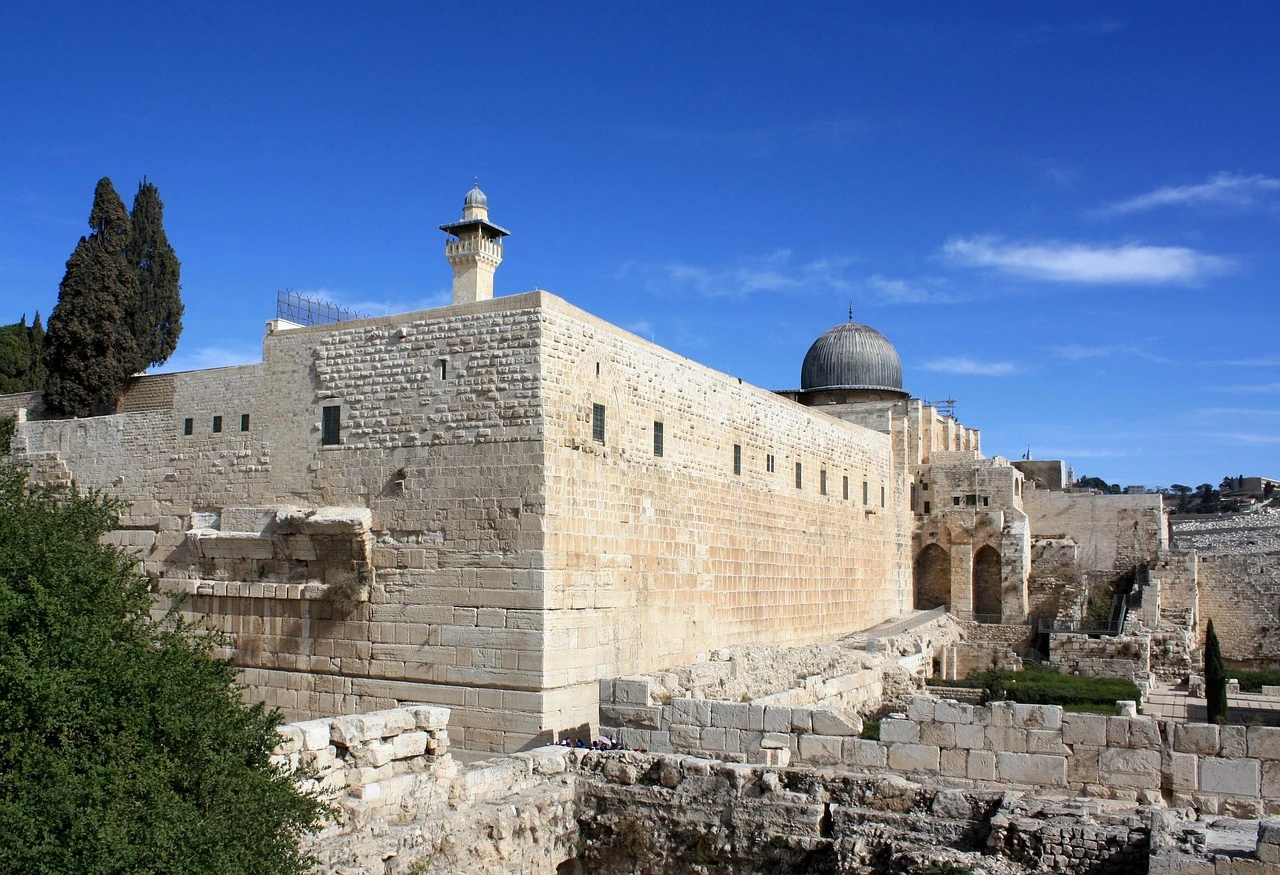
The question keeps coming up — in classrooms, dinner conversations, and late-night internet searches. And it deserves a real answer, not a defensive one. Archaeological discoveries over the past 150 years have confirmed hundreds of biblical details: specific rulers, places, and events once considered legendary. At the same time, honest scholars — including believing Christians — acknowledge that parts of the Bible resist simple historical verification. The picture is rich, complicated, and worth exploring with an open mind.
Key Takeaways
- Archaeology has confirmed many specific biblical people, places, and events — including rulers previously known only from Scripture.
- The Dead Sea Scrolls (discovered 1947) show the Old Testament text was transmitted with remarkable accuracy over centuries.
- Most historians and archaeologists accept large portions of the Bible as reliable ancient historical sources.
- Some events — like the Exodus in its biblical scale — remain debated among scholars, including faithful Christian scholars.
- Catholic, Orthodox, and Protestant traditions hold different views on inerrancy (no errors) vs. infallibility (trustworthy in matters of faith and salvation).
- All major Christian traditions agree the Bible is the inspired Word of God — they differ on how inspiration relates to historical precision.
- You don't have to resolve every scholarly debate to encounter God through the Bible.
What Does "Historically Accurate" Actually Mean?
Historical accuracy is not a single thing — it covers multiple questions. Does the Bible accurately name real rulers? Does it describe real places? Does it record events in the way a modern historian would? These are separate questions, and confusing them generates a lot of heat without much light.
The Bible is an ancient library — 66 books (Protestant canon) or 73 books (Catholic canon), written over roughly 1,000 years, across multiple genres: poetry, prophecy, law, narrative, letters, and apocalypse (symbolic visions). Expecting uniform journalistic precision from this collection would be like applying it to Homer's Iliad and Shakespeare's history plays at the same time.
What historians actually ask is whether the Bible reflects a genuine ancient context — whether its geography, customs, rulers, and events align with what we can verify from outside sources. On that standard, the evidence is substantial and growing.
What Has Archaeology Confirmed?
Archaeology has produced some remarkable confirmations of biblical figures and events. 53 people mentioned in the Hebrew Bible have been confirmed through external inscriptions and artifacts, according to research by Lawrence Mykytiuk published in Biblical Archaeology Review (2014, updated 2017).
Here are some of the clearest examples:
- King David (c. 1000 BCE): The Tel Dan Inscription, discovered in northern Israel in 1993, mentions "the house of David" — the first extra-biblical evidence for David's dynasty. Before that find, some scholars doubted David was a historical figure at all.
- Hezekiah's Tunnel (c. 700 BCE): A 1,750-foot tunnel under Jerusalem, described in 2 Kings 20:20, was carved to protect the city's water supply during an Assyrian siege. It still exists. Visitors can walk through it today.
- The Siloam Inscription: An ancient Hebrew inscription found inside Hezekiah's Tunnel describes the moment the two teams of workers met in the middle — matching the biblical account almost perfectly.
- Sennacherib's Prism: This Assyrian royal record (now in the Oriental Institute, Chicago) describes Sennacherib's campaign against Jerusalem and his siege of Hezekiah — matching 2 Kings 18–19 in striking detail, though with predictably different spin from the Assyrian perspective.
- Pontius Pilate: A stone inscription discovered at Caesarea Maritima in 1961 names "Pontius Pilatus, Prefect of Judea" — confirming the Roman governor who sentenced Jesus to death.
- The Pool of Siloam (John 9): Archaeological excavations in Jerusalem in 2004 uncovered the first-century pool where Jesus healed a blind man, described in John 9:7.

What Are the Dead Sea Scrolls, and Why Do They Matter?
The Dead Sea Scrolls are one of the most important manuscript discoveries in history. Discovered between 1947 and 1956 in caves near Qumran (on the shores of the Dead Sea), they include portions of every Old Testament book except Esther — some dating to around 150 BCE. That makes them over 1,000 years older than the previously oldest known Hebrew manuscripts.
When scholars compared these ancient scrolls to the medieval copies used to translate modern Bibles, the texts matched with extraordinary consistency. The book of Isaiah, for example, was copied almost word-for-word across 1,000 years of transmission. This is a remarkable vindication of the Jewish scribal tradition's care and accuracy.
The scrolls are now housed in the Shrine of the Book at the Israel Museum in Jerusalem and have been fully digitized. They remain a landmark for understanding the transmission of the biblical text.
Citation Capsule: The Great Isaiah Scroll from Qumran (1QIsa^a, c. 125–150 BCE) confirmed that the biblical text was transmitted with extraordinary care over a millennium. When scholars compared it to the medieval Masoretic Text, the vast majority of differences proved to be spelling variations and minor scribal corrections — with no impact on theological content. As Britannica's "Dead Sea Scrolls" article notes, the scrolls demonstrated the remarkable fidelity of transmission.
Where Do Historians Have Genuine Questions?
Intellectual honesty requires acknowledging where the evidence is less clear — and where even faithful Christian scholars raise legitimate questions.
The Exodus: The Bible describes the Israelites leaving Egypt as a group of 600,000 men (plus women and children), which would mean a population of perhaps 2 million people wandering the Sinai Peninsula. No Egyptian records mention this event. No clear archaeological evidence for a mass encampment in Sinai during the relevant period has been found. Many archaeologists — including Israeli scholars working from a Jewish faith perspective — argue the Exodus as described in numbers is historically difficult to sustain.
Some scholars propose a smaller historical core — a group of Semitic people who escaped Egypt and whose story was later amplified in the retelling. Others argue absence of evidence is not evidence of absence, especially in a desert where organic materials don't preserve well.
The Conquest of Canaan: The book of Joshua describes rapid, complete military victories over Canaanite cities. Archaeological evidence from sites like Jericho and Ai shows either no occupation during the relevant period or gradual, non-violent transition — not the sudden conquest the text describes. Scholars continue to debate this actively.
The United Monarchy: Some archaeologists question whether the kingdoms of David and Solomon were as large and centralized as the biblical text suggests. Others — including Israeli archaeologist Eilat Mazar — have argued that significant monumental structures uncovered in Jerusalem date to the 10th century BCE, the traditional Davidic period.
These debates are genuine. They don't resolve easily, and believers don't need to pretend they do.
What Do Inerrancy and Infallibility Actually Mean?
Different Christian traditions use specific technical terms for how they understand biblical authority. Understanding the distinction helps make sense of where different churches stand.
Inerrancy is the view — common in Evangelical and many conservative Protestant circles — that the Bible, in its original manuscripts (the "autographs"), is without error in all it affirms: historical, scientific, and theological claims alike. The Chicago Statement on Biblical Inerrancy (1978) is the classic formulation. Many Evangelical scholars acknowledge this doesn't mean the Bible uses modern scientific language or Western historical conventions — but it does mean nothing it asserts is false.
Infallibility is a broader term, favored by many Catholic, Orthodox, and mainline Protestant traditions. It holds that the Bible is fully trustworthy and reliable in all matters necessary for faith and salvation. It may use ancient cosmological language (a "firmament" in the sky) or round numbers without that being a theological error, because the purpose of those passages is not scientific instruction.
The Catholic Church, in the Second Vatican Council document Dei Verbum (1965), states: "The books of Scripture must be acknowledged as teaching solidly, faithfully and without error that truth which God wanted put into them for the sake of our salvation." Note the qualifier: the truth relevant to salvation is guaranteed. The church does not claim historical or scientific inerrancy in the same way some Protestant traditions do.
The Orthodox Church holds a similar position, grounding biblical authority in the life of the Church and the Holy Spirit's guidance of the community interpreting Scripture.
Evangelical Protestants (e.g., Southern Baptist Convention, many Reformed traditions) generally hold to full inerrancy as a confessional commitment.
All three positions affirm that the Bible is the inspired, authoritative Word of God. They differ on what inspiration implies about historical detail.
In our experience helping readers across traditions, this distinction genuinely matters — not to cause doubt, but to free people from a false dilemma where they must either affirm perfection on every scientific and historical point or abandon faith entirely. Most major Christian traditions are more nuanced than either pole.
Does Archaeology Prove or Disprove the Bible?
Neither, strictly speaking — and this is important to understand.
Archaeology can confirm that specific places existed, that specific rulers reigned, and that specific events left material traces. It cannot prove spiritual truths. It cannot confirm or deny whether God spoke to Moses, whether Jesus rose from the dead, or whether the Holy Spirit inspired specific authors. Those claims are theological and require a different kind of reasoning.
What archaeology does is give us a picture of the ancient world that we can compare with the biblical text. When the picture matches well — as it often does — it increases historical confidence. When there are gaps or discrepancies, it raises questions worth sitting with.
The Bible was written in a specific time, place, and culture — first-century Judea, ancient Israel, the Greco-Roman world. Understanding that context, rather than reading it as a modern textbook, is what serious Bible study requires. If you want to explore the text in depth, Bible Expert's AI Bible Chat lets you ask questions about any verse and get answers grounded in the actual text — across 1,200+ translations in 70+ languages.
How Do Different Bible Translations Affect Historical Study?
Translation choices can significantly affect how historical or scientific claims appear in English. Consider the Hebrew word yom (day) in Genesis 1 — it can mean a 24-hour day, a longer era, or a symbolic period. How a translator renders it reflects interpretive choices, not just linguistic ones.
The same is true for numbers. Ancient Near Eastern texts routinely used large numbers symbolically rather than literally. When 1 Chronicles lists 100,000 soldiers, a modern historian reads that differently than a precise census count.
Comparing translations side by side — which you can do in Bible Expert with any verse across hundreds of versions — helps you see where interpreters make different choices and why those choices matter.
For a deeper look at translation differences, see our guide to NIV vs. ESV vs. KJV vs. NLT.
Does Historical Uncertainty Undermine Faith?
Not necessarily — and many serious Christian thinkers would say it doesn't have to. The question is what you're basing faith on.
The Christian faith ultimately rests on the claim that a historical person, Jesus of Nazareth, lived, was crucified, and rose from the dead. That central claim is attested in multiple ancient sources — including non-Christian historians like Josephus and Tacitus. The Apostle Paul's letters, some of the earliest documents in the New Testament, include what scholars recognize as a pre-Pauline creed listing resurrection appearances, dating to within just a few years of the crucifixion (1 Corinthians 15:3–7).
The historian of early Christianity operates in a world of limited evidence — as with any ancient event. But the core claims of the Christian faith are not uniquely implausible by the standards of ancient history.
Augustine of Hippo, writing in the 4th century, distinguished between matters of scientific explanation and matters of salvation. He cautioned against Christians making confident claims about natural science in the name of Scripture — and being embarrassed when those claims proved wrong. His advice has worn well over 1,600 years.
If you're wrestling with these questions personally, we'd encourage you to also talk with a pastor, priest, or spiritual director who can walk with you beyond what any blog post can offer. For more on how to read the Bible with context and care, see our guide on how to study the Bible.
Frequently Asked Questions
Is the Bible historically accurate?
Many biblical events, rulers, and places have been confirmed by archaeology and ancient records. Some events remain debated. Most historians treat the Bible as a genuine and valuable ancient source, while noting it uses ancient literary conventions that differ from modern historical writing.
What archaeological evidence supports the Bible?
Confirmed finds include the Tel Dan Inscription (mentioning the "house of David"), Sennacherib's Prism (describing the Assyrian siege of Jerusalem), the Pontius Pilate stone, Hezekiah's Tunnel, and the Pool of Siloam — among hundreds of others.
Did the Exodus really happen?
The Exodus in its biblical scale (2 million people) has no direct archaeological confirmation. Scholars debate a smaller historical core vs. a fully theological narrative. Egyptian records do not mention the event. This remains an active area of scholarly discussion, including among faithful Jewish and Christian scholars.
What are the Dead Sea Scrolls?
The Dead Sea Scrolls are ancient manuscripts discovered near Qumran between 1947–1956. They include the oldest known copies of Old Testament books, some dating to 150 BCE. Comparison with later manuscripts shows the text was transmitted with remarkable accuracy over more than 1,000 years.
What is the difference between inerrancy and infallibility?
Inerrancy (common in Evangelical traditions) holds that the Bible is without error in everything it affirms, including history. Infallibility (common in Catholic, Orthodox, and mainline Protestant traditions) holds that the Bible is fully trustworthy in matters of faith and salvation, without claiming the same for every historical or scientific detail.
Does the Catholic Church believe the Bible is historically accurate?
The Catholic Church teaches that the Bible teaches "without error that truth which God wanted put into them for the sake of our salvation" (Dei Verbum, 1965). This is a nuanced position — not blanket historical inerrancy, but full trustworthiness in matters of faith. For a deeper look at scriptural interpretation across traditions, see our Old Testament vs. New Testament overview.
Can you be a Christian and have questions about biblical history?
Yes. Many serious Christian scholars — including those at Oxford, Cambridge, and Catholic seminaries worldwide — hold deep faith while also engaging critically with historical questions about the Bible. Faith and historical inquiry are not automatically in conflict. For common questions about Scripture and faith, visit our Bible FAQ.
Which Bible translation is best for historical study?
The New Revised Standard Version (NRSV) is widely used in academic and ecumenical settings for its careful translation choices. The English Standard Version (ESV) is popular in Evangelical scholarship. For comparing how different versions handle key passages, Bible Expert lets you view 1,200+ translations side by side.
📱 Read the Bible anywhere with Bible Expert 1,200+ translations, audio Bible, and AI Bible Chat — free. iPhone / iPad · Mac · Android · Windows · Other device
Julien is the editorial voice of Bible Expert — a non-denominational Bible companion app with 1,200+ translations, audio Bible, AI Bible Chat, and daily verse features. She writes to make Scripture accessible to everyone, from curious newcomers to lifelong readers.