

Christians around the world gather around a table, share bread and wine (or grape juice), and remember Jesus. But what they believe is happening in that moment differs — sometimes dramatically — across traditions. Is it a sacrifice? A memorial? A sacrament? This guide walks through every major view, fairly and clearly.
Key Takeaways
- The words Eucharist, Lord's Supper, and Communion all refer to the same practice — sharing bread and wine as Jesus commanded — but each name carries theological weight.
- Catholics believe the bread and wine truly become the body and blood of Christ (transubstantiation).
- Eastern Orthodox Christians affirm a real but mystical transformation, celebrated in the Divine Liturgy.
- Lutherans hold that Christ's body and blood are truly present "in, with, and under" the bread and wine (sacramental union).
- Reformed and Presbyterian Christians believe Christ is spiritually (not physically) present in the elements.
- Baptists and many Evangelicals view Communion as a memorial ordinance — a symbolic act of remembrance.
- All traditions ground the practice in the words of Jesus at the Last Supper (Matthew 26:26-28, NIV) and Paul's teaching in 1 Corinthians 11.
What Do the Words "Eucharist," "Lord's Supper," and "Communion" Mean?
The three names are not interchangeable in every church, even though they describe the same basic practice. Eucharist comes from the Greek eucharistia, meaning "thanksgiving." It is the preferred term in Catholic, Orthodox, and many Anglican churches, reflecting the prayer of thanks Jesus offered over the bread and cup. Lord's Supper is the New Testament phrase Paul uses in 1 Corinthians 11:20 (NIV) and is common in Baptist, Evangelical, and many Protestant churches. Communion — short for "Holy Communion" — emphasizes the believer's fellowship with Christ and the body of believers; it appears across almost all traditions.
The terminology you encounter in a church often signals its theology. Choosing one name over another is itself a small theological statement.
What Does the Bible Say About It?
The New Testament gives two primary accounts. Jesus instituted the meal on the night before his crucifixion. He took bread, gave thanks, broke it, and said: "This is my body, which is given for you; do this in remembrance of me" (Luke 22:19, NIV). Then he took the cup: "This cup is the new covenant in my blood, which is poured out for you" (Luke 22:20, NIV).
Paul quotes an early tradition in 1 Corinthians 11:23-26 (NIV), adding that eating the bread and drinking the cup "proclaim the Lord's death until he comes." This proclamation language shaped the memorial view. John 6:51-58 (NIV), where Jesus says "my flesh is real food and my blood is real drink," became foundational for the Catholic and Orthodox understanding of real presence. Scholars across traditions acknowledge the passage is debated: is Jesus speaking literally or metaphorically?
Citation capsule: The three Synoptic Gospels (Matthew 26:26-28; Mark 14:22-24; Luke 22:19-20) all record the words of institution. Paul's account in 1 Corinthians 11:23-26 is the earliest written record, predating the Gospels by roughly a decade. The phrase "do this in remembrance of me" appears only in Luke and Paul — a detail that fuels ongoing theological debate.
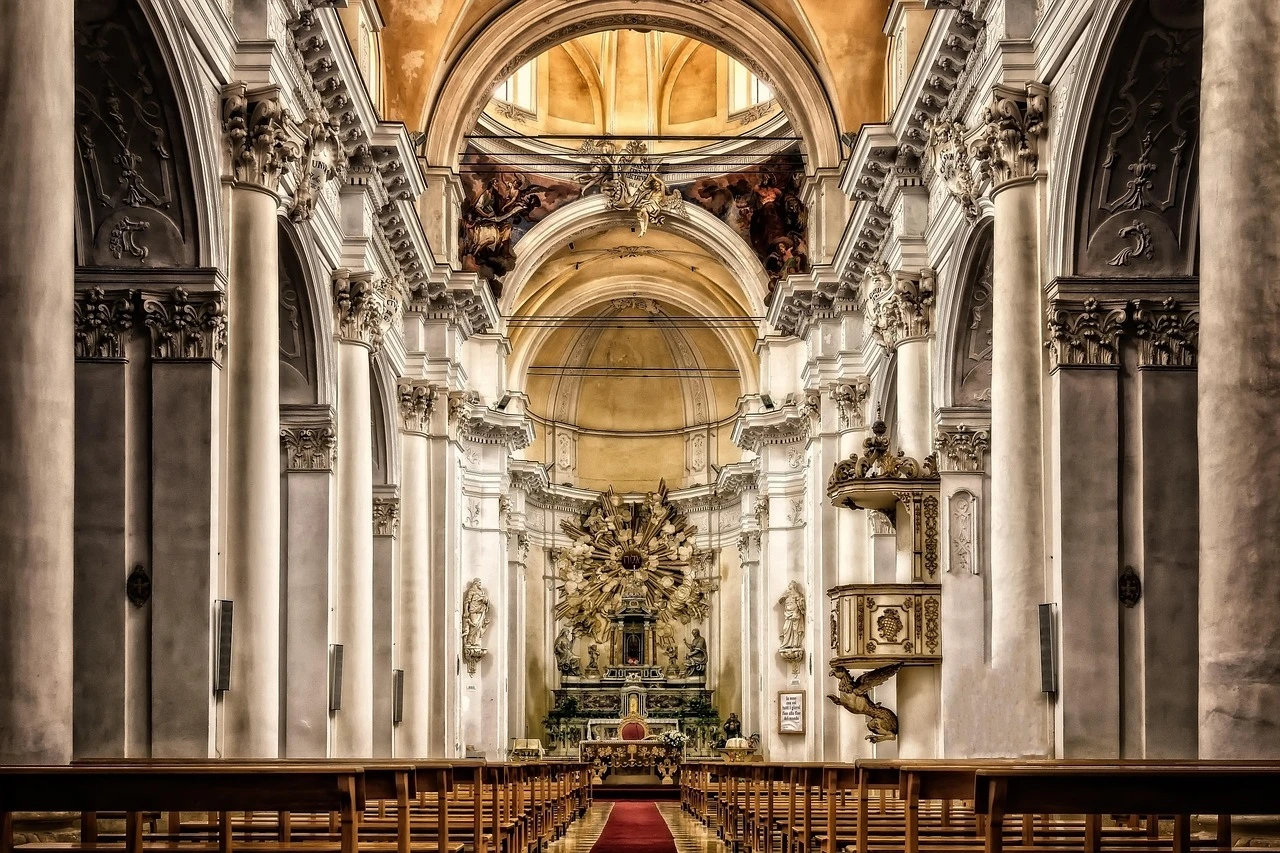 The altar and elements of Communion — central to Christian worship across traditions.
The Catholic View: Transubstantiation and the Mass
The Catholic Church teaches that the bread and wine are truly and substantially transformed into the body and blood of Christ at every Mass. This teaching — called transubstantiation (the change of one substance into another) — was defined dogmatically at the Fourth Lateran Council in 1215 and reaffirmed at the Council of Trent (1545–1563). According to the Catechism of the Catholic Church (§1374), "the body and blood, together with the soul and divinity, of our Lord Jesus Christ... are truly, really, and substantially contained" in the Eucharist.
The Mass is also understood as a sacrifice — not a new sacrifice, but a re-presentation of Christ's once-for-all sacrifice on the cross (Catechism §1366). Catholics receive the Eucharist as the "source and summit of the Christian life" (Lumen Gentium §11, Second Vatican Council). Reception is ordinarily reserved for baptized Catholics in a state of grace. For a deeper look at what grace means in Scripture, see our dedicated guide.
Citation capsule — Source: Vatican.va, Catechism of the Catholic Church §1322–1419 (official English text available at vatican.va/archive/ENG0015). The doctrine of transubstantiation uses Aristotelian philosophical categories: the substance (what a thing truly is) changes while the accidents (appearance, taste, smell) remain bread and wine.
The Eastern Orthodox View: The Divine Liturgy
Eastern Orthodox Christianity affirms the real presence of Christ in the Eucharist, celebrated during the Divine Liturgy (most commonly the Liturgy of St. John Chrysostom or St. Basil the Great). The Orthodox Church deliberately avoids the Western philosophical term "transubstantiation," preferring to speak of a genuine but mystical transformation that surpasses human understanding.
The Orthodox theology of the Eucharist centers on the epiclesis — the prayer calling on the Holy Spirit to transform the gifts. The Eucharist is the central act of Orthodox worship, normally celebrated on Sundays and feast days. Reception requires baptism and chrismation in the Orthodox faith, and typically preparation through fasting and confession.
Citation capsule — Source: The Orthodox Church in America (OCA) holds the Divine Liturgy at the center of all ecclesial life. St. John of Damascus (8th century) wrote that the change of the bread and wine is "wrought by the Holy Spirit." The Divine Liturgy text is publicly available at oca.org.
The Lutheran View: Real Presence and Sacramental Union
Martin Luther rejected transubstantiation but firmly rejected the symbolic view too. Lutherans believe that Christ's body and blood are truly present "in, with, and under" the bread and wine — a position sometimes called sacramental union or consubstantiation (though Luther himself disliked the latter term). The bread remains bread; Christ's body is simultaneously present.
Luther grounded this in the plain reading of Jesus's words: "This is my body" (Matthew 26:26, NIV) — est, not significat ("is," not "represents"). The Lutheran confessional standard — the Book of Concord (1580) — states in the Augsburg Confession (Article X) that "the Body and Blood of Christ are truly present, and are distributed to those who eat the Supper of the Lord." The phrase "in, with, and under" the bread and wine comes from the Smalcald Articles, also in the Book of Concord. The Lord's Supper is a means of grace that delivers forgiveness.
Citation capsule — Source: Book of Concord, Augsburg Confession Article X and the Smalcald Articles (bookofconcord.org). Luther's 1528 "Confession Concerning Christ's Supper" is his most detailed defense of real presence against Zwingli's symbolic view.
The Reformed / Calvinist View: Spiritual Presence
John Calvin staked out a middle position between Luther and Zwingli. He rejected both transubstantiation and Luther's bodily presence — but also rejected a purely symbolic view. Calvin taught that Christ's body is at the right hand of the Father in heaven, yet believers truly receive Christ spiritually by faith as they eat the bread and drink the cup. This is sometimes called spiritual presence or "virtualism."
The Westminster Confession of Faith (1647), the doctrinal standard for Presbyterian and many Reformed churches, says the Lord's Supper is "not after a corporal and carnal manner, but... sacramentally" (Chapter XXIX). The elements are signs and seals of Christ's grace. The Supper nourishes faith. Reception is open to baptized believers who examine themselves (1 Corinthians 11:28).
Citation capsule — Source: Westminster Confession of Faith, Chapter XXIX (available at opc.org/wcf.html). Calvin's Institutes of the Christian Religion (Book IV, Chapter 17) contains his most developed Eucharistic theology. He called the Supper "a spiritual banquet."
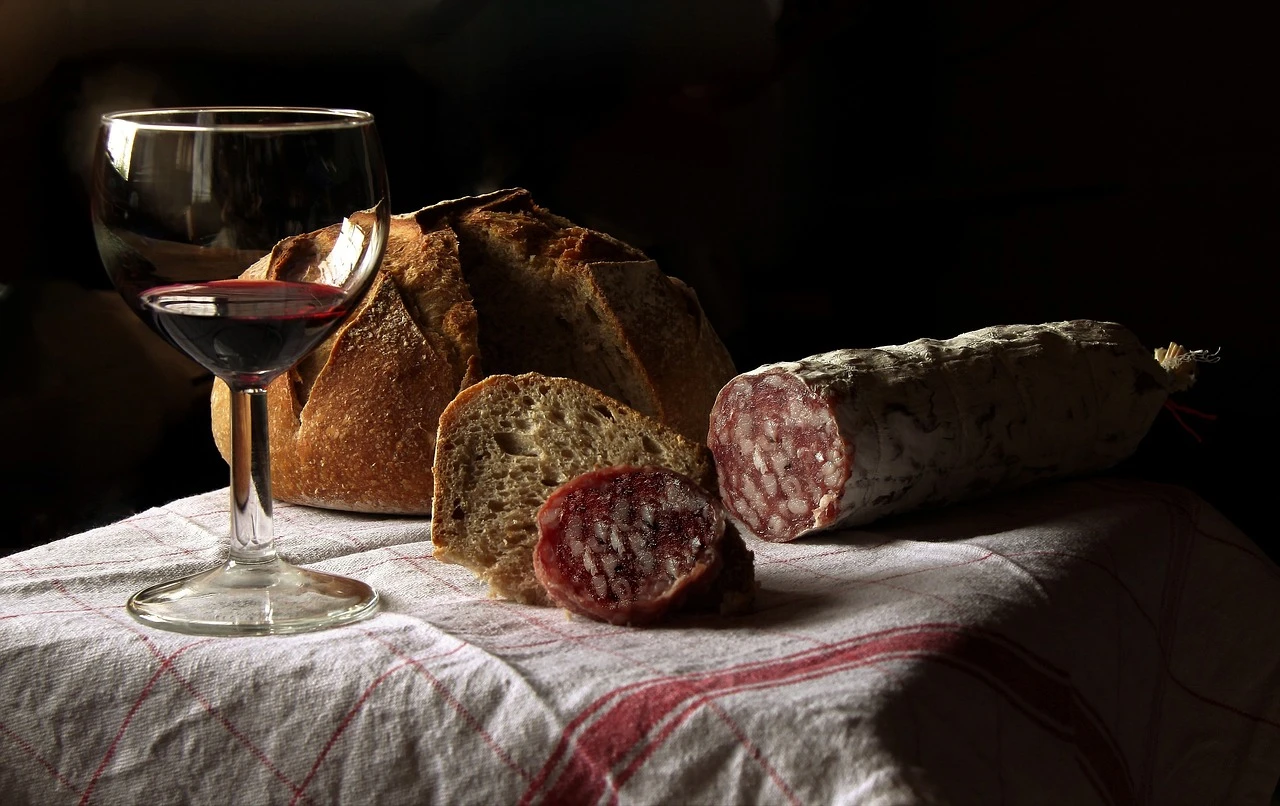 Bread and cup — the simple elements at the heart of every Communion service.
The Baptist and Evangelical View: Memorial Ordinance
Most Baptist, nondenominational Evangelical, and many Pentecostal churches hold that Communion is a memorial — a symbolic act of remembrance, not a sacrament that conveys grace. This view traces to the Swiss Reformer Ulrich Zwingli (1484–1531), who argued that "this is my body" means "this signifies my body." The bread and cup represent Christ's sacrifice; they do not contain or convey his physical or spiritual presence in any unique way.
Baptists typically call the practice an ordinance (commanded by Jesus) rather than a sacrament (a means of grace). The focus is on obedience, proclamation, and community remembrance. Frequency varies widely — monthly, quarterly, or weekly. Open Communion (welcoming all believers) or closed Communion (for members only) policies differ by congregation.
Citation capsule — Source: The Baptist Faith and Message 2000 (Section VII) states that the Lord's Supper "is a symbolic act of obedience whereby members... memorialize the death of the Redeemer and anticipate His second coming" (sbc.net/bfm2000). Grape juice replaced wine in many Baptist churches during the 19th-century temperance movement.
How Often Do Christians Take Communion?
Practice varies enormously. The Catholic Church requires reception at least once per year (during Easter season) and offers the Eucharist at every Mass — often daily. Eastern Orthodox parishes celebrate the Divine Liturgy on Sundays and major feasts; devout Orthodox Christians may receive weekly after preparation. Lutherans typically celebrate weekly or bi-weekly. Reformed and Presbyterian churches range from weekly (many contemporary churches) to quarterly (following the practice of early Reformed congregations). Baptist and Evangelical congregations often celebrate monthly or quarterly, though the "ancient future" liturgical renewal has led many to move toward weekly Communion.
The early church appears to have celebrated the breaking of bread frequently — Acts 2:46 (NIV) says believers broke bread "every day." By the early 2nd century, Justin Martyr's First Apology (c. 155 AD) describes a Sunday Eucharist as the standard pattern.
FAQ
Is the Eucharist the same as Communion?
Yes and no. Both words describe the same practice — sharing bread and wine as Jesus commanded. "Eucharist" (from the Greek for "thanksgiving") is preferred in Catholic, Orthodox, and Anglican churches. "Communion" is used across almost all traditions. The names carry different theological emphases but refer to the same ritual meal.
What is transubstantiation?
Transubstantiation is the Catholic teaching that at consecration during Mass, the bread and wine are truly and substantially changed into the body and blood of Christ. The outward appearance (taste, smell, texture) stays the same, but the inner reality transforms. This doctrine was formally defined at the Fourth Lateran Council in 1215 and reaffirmed at the Council of Trent (1563).
Do all Christians believe in the real presence of Christ in the Eucharist?
No. Catholics, Eastern Orthodox Christians, and Lutherans affirm that Christ is truly present in the Eucharist in some sense. Reformed Christians affirm a spiritual presence by faith. Baptists and many Evangelicals believe the elements are symbolic memorials with no unique presence of Christ. This is one of the most significant theological divides in Christianity.
What is the difference between a sacrament and an ordinance?
A sacrament is understood as a means of grace — a visible sign through which God genuinely acts on the believer (Catholic, Orthodox, Lutheran, Reformed). An ordinance is a commanded act of obedience and remembrance without conveying grace in itself (Baptist, Evangelical). The distinction shapes how churches view the Lord's Supper's purpose and effect.
Who can receive Communion?
It depends on the church. Catholic and Orthodox churches practice closed Communion — restricting reception to baptized members in good standing. Many Protestant churches practice open Communion — welcoming all who trust in Christ. Some Baptist churches invite only their own members (close Communion). If you're visiting a new church, it's respectful to follow their guidelines or ask a pastor.
Why do some churches use grape juice instead of wine?
The use of unfermented grape juice became widespread among Baptist and Methodist churches in the late 19th century during the temperance movement. Thomas Bramwell Welch, a Methodist deacon, developed pasteurized grape juice in 1869 partly for Communion use. Most Catholic, Orthodox, Lutheran, and Anglican churches continue to use fermented wine, seeing it as more faithful to the biblical accounts.
What does John 6 say about the Eucharist?
In John 6:51-58 (NIV), Jesus says "Whoever eats my flesh and drinks my blood has eternal life." Catholics and Orthodox Christians read this as foundational for the real presence. Many Protestant scholars interpret the passage as spiritual-metaphorical language, pointing to John 6:63 (NIV): "The Spirit gives life; the flesh counts for nothing." The debate over John 6 has been at the center of Eucharistic theology for centuries.
Exploring the Eucharist With Scripture
If you want to read the key passages side by side — Matthew 26, Mark 14, Luke 22, John 6, and 1 Corinthians 11 — Bible Expert's side-by-side translation comparison and AI Bible Chat make it easy to explore across 1,200+ Bible translations. You can read the same verse in the NIV, ESV, KJV, NRSV, and the Catholic NABRE in seconds. For deeper study, the AI Bible Chat can help you explore how different traditions have interpreted these passages throughout church history.
Whatever your tradition, the Lord's Supper is an invitation to encounter Christ — in bread, in cup, in community. If you have questions about your own church's practice or theology, your pastor, priest, or spiritual director is the best person to guide you.
Julien is a Bible educator and content writer at Bible Expert, passionate about making Scripture accessible across all Christian traditions.
📱 Read the Bible anywhere with Bible Expert 1,200+ translations, audio Bible, and AI Bible Chat — free. iPhone / iPad · Mac · Android · Windows · Other device