

The Bible is the world's most translated book — portions exist in over 1,300 languages as of the late 20th century, according to Encyclopedia Britannica. Yet for all its reach, it still raises questions that stop readers in their tracks: When was this written? Who decided what went in? Are there really contradictions? This guide addresses the most common questions about the Bible — clearly, fairly, and without favoring any single tradition.
Whether you're approaching Scripture for the first time or revisiting questions you've had for years, these answers aim to give you a solid foundation. For deeper personal or doctrinal guidance, a pastor, priest, or spiritual director is always the best person to consult.
Key Takeaways
- The Bible was written over roughly 1,500 years, from approximately the 10th century BCE to the late 1st or early 2nd century CE.
- It was originally composed in three languages: Hebrew, Aramaic, and Greek.
- The Old Testament (Hebrew Bible) contains 39 books in Protestant and Jewish traditions; Catholic Bibles add 7 deuterocanonical books for a total of 46; Eastern Orthodox canons vary further.
- The New Testament canon was first formally listed by Athanasius of Alexandria in 367 CE.
- Over 5,800 Greek New Testament manuscripts survive — more than any other ancient text of comparable age.
- The Dead Sea Scrolls (discovered 1947) contain manuscripts dating to the 3rd century BCE, confirming remarkable textual stability over millennia.
- The first complete English Bible was produced by John Wycliffe's circle around 1382.
- Scholars widely distinguish between apparent contradictions (differences in perspective or emphasis) and genuine historical discrepancies — and both exist in the text.
- The Bible is the subject of more academic study than any other ancient document, making it the most scrutinized book in human history.
About the Bible's History
When Was the Bible Written?
The Bible was composed over an extraordinarily long period. Hebrew Bible writings likely began around the 10th century BCE, with the Torah (the first five books) taking its current form during the Babylonian Exile of the 6th–5th century BCE. The entire Hebrew Bible was essentially complete by about 100 CE. New Testament books were written in the 1st and 2nd centuries CE.
Citation capsule: According to Encyclopedia Britannica, portions of the Hebrew Bible date to "perhaps the 10th century BCE," with the Torah finalized during the Babylonian Exile. The entire Hebrew Bible was complete by approximately 100 CE. New Testament books followed in the 1st–2nd centuries CE.
This means the Bible reflects over a millennium of religious writing, compiled by many authors in very different historical settings.
Who Wrote the Bible?
No single person wrote the Bible. It's a collection of texts by dozens of authors — kings, prophets, fishermen, poets, and scholars — writing across many centuries. Moses is traditionally credited with the Torah; David with many Psalms; Paul with 13 New Testament epistles. Scholars debate the authorship of several books, and many texts are anonymous. The question "who wrote the Bible?" is really a question about a whole library of writings.
If you'd like to explore each book's authorship in detail, see our dedicated guide: Who Wrote the Bible? Authorship Explained Book by Book.
What Language Was the Bible Originally Written In?
The Bible was written in three languages:
- Hebrew — the primary language of the Old Testament
- Aramaic — a few passages in Daniel and Ezra, and some NT phrases (e.g., "Eloi, Eloi, lema sabachthani?" in Mark 15:34)
- Greek — the entire New Testament, plus the Septuagint (the Greek translation of the Hebrew Bible used by early Christians)
Understanding the original languages matters because translation always involves interpretation. Bible Expert lets you compare 1,200+ translations side-by-side to see how different translators handled the same original text.
About the Bible's Contents
How Many Books Are in the Bible?
The answer depends on your tradition:
| Tradition | Old Testament Books | New Testament Books | Total |
|---|---|---|---|
| Protestant | 39 | 27 | 66 |
| Roman Catholic | 46 (includes 7 deuterocanonical books) | 27 | 73 |
| Eastern Orthodox | 49–51 (varies by church) | 27 | 76–78 |
| Ethiopian Orthodox | ~46 OT books + Enoch, Jubilees | 35 | 81 |
The extra books in Catholic and Orthodox Bibles — such as Tobit, Judith, 1 and 2 Maccabees, Sirach, Wisdom, and Baruch — are called deuterocanonical ("second canon") by Catholics and apocrypha ("hidden writings") by most Protestants. These books were included in the Septuagint (the Greek Old Testament widely used by early Christians) but were not in the final Jewish canon.
For a full breakdown, see Catholic vs Protestant vs Orthodox Bibles: What's Different?
Why Do Catholic and Protestant Bibles Differ?
The difference comes down to which Old Testament canon was used. Early Christians largely used the Septuagint, which included books not found in the final Jewish Hebrew canon. At the Protestant Reformation (16th century), reformers like Martin Luther chose to align the Old Testament with the Jewish canon — removing the deuterocanonical books. The Catholic Church responded at the Council of Trent (1545–1563) by formally affirming the 46-book Old Testament, including those books.
Neither tradition "added" books arbitrarily — both were making deliberate choices about which ancient sources to follow.
What Is the Canon of Scripture?
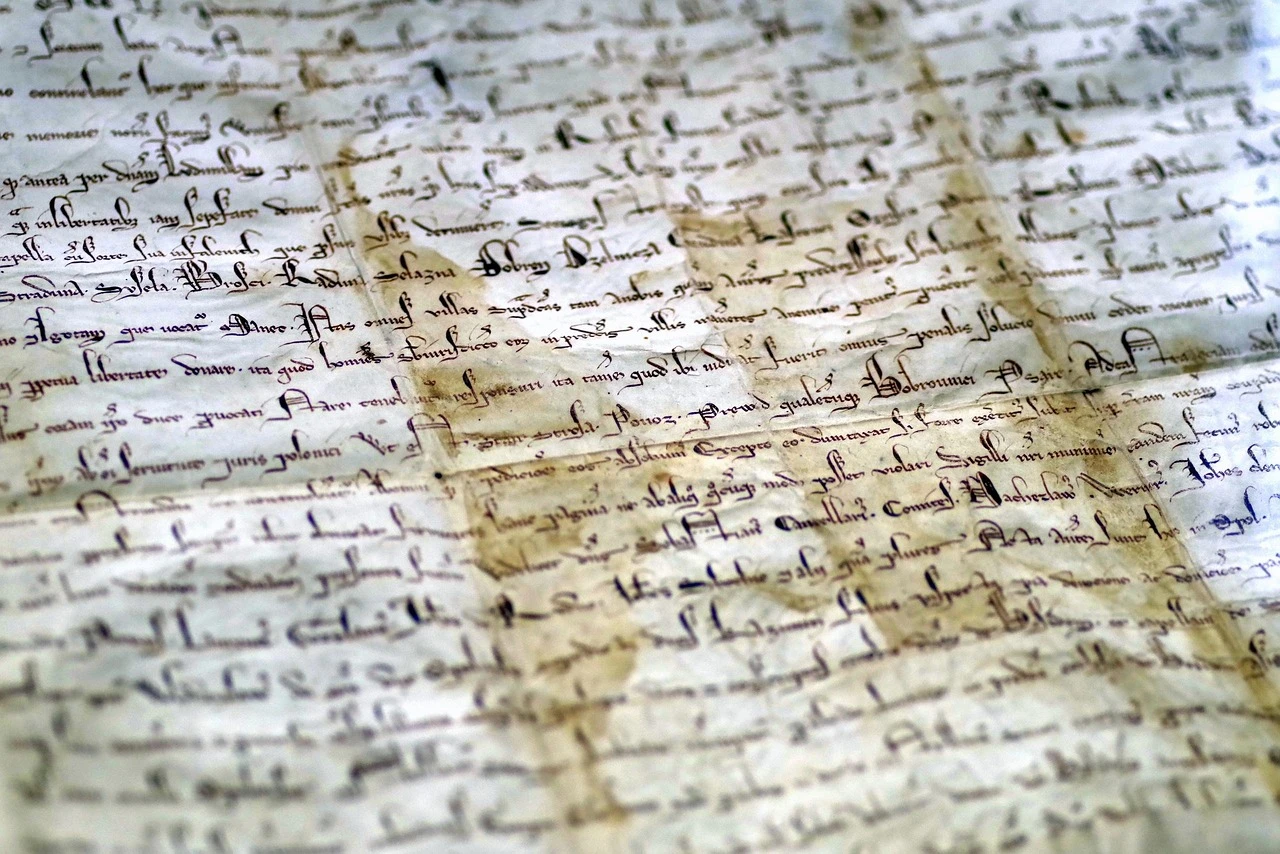
The canon (from the Greek kanōn, meaning "rule" or "measuring rod") refers to the official collection of books recognized as Scripture by a given tradition. Deciding the canon was a centuries-long process, not a single meeting.
For the Old Testament, the Jewish rabbinical assembly at Jabneh (Jamnia) around 90–100 CE finalized the Hebrew canon under Rabbi Akiva. For the New Testament, the earliest surviving formally circulated ecclesiastical list matching today's 27 books appears in Athanasius of Alexandria's 39th Festal Letter of 367 CE — though earlier writers such as Origen had referenced a substantially complete list. The Council of Carthage (397 CE) confirmed this list for Western Christianity. Catholic and Orthodox traditions further shaped their canons through later councils.
Citation capsule: Encyclopedia Britannica notes that the 27-book New Testament canon "appears for the first time in the 39th Festal Letter of Athanasius, 367 CE," while the Old Testament Hebrew canon was finalized by "the assembly of rabbis at Jabneh (Jamnia) about 90 or 100 CE."
About the Bible's Reliability
How Many Manuscripts of the Bible Exist?
The manuscript evidence for the New Testament is extraordinary by any ancient-literature standard. Scholars have catalogued over 5,800 Greek manuscripts of the New Testament (via the Institute for New Testament Textual Research, University of Münster) — plus thousands more in Latin, Coptic, Syriac, and other languages. For comparison, most classical works like Caesar's Gallic Wars or Homer's Iliad survive in fewer than 700 manuscripts.
For the Old Testament, the Dead Sea Scrolls — discovered in 1947 near the Dead Sea — contain fragments from 800 to 900 original manuscripts, dating from the 3rd century BCE to the 2nd century CE (Britannica). Their comparison with later medieval manuscripts showed that the Hebrew text had been copied with remarkable accuracy over more than 1,000 years. The Dead Sea Scrolls Digital Library provides free public access to high-resolution images of the original manuscripts.
Is the Bible Historically Accurate?
This question has a layered answer — and honest scholars give a layered response.
Where archaeology confirms Scripture: Many specific people, places, and events described in the Bible have been corroborated by archaeology: the existence of Assyrian kings mentioned in 2 Kings, the Pool of Siloam from John 9, the inscription of Pontius Pilate discovered at Caesarea Maritima, and hundreds of place names.
Where the picture is more complex: Large narrative sections — especially early Genesis — are understood by the majority of biblical scholars as theological writings rather than strict historical accounts. Britannica notes directly that the creation accounts "furnish a profoundly theological interpretation of the universe and human existence" rather than scientific or historical description.
The scholarly consensus is that the Bible is a collection of texts with different literary genres: poetry, law, prophecy, history, wisdom literature, and apocalyptic writing. Each genre requires a different reading approach.
For a deeper exploration of this topic, see Is the Bible Historically Accurate?
Are There Contradictions in the Bible?
Yes, the Bible contains passages that appear to conflict — and Christians across traditions acknowledge this while interpreting it differently. In conversations with Bible Expert users, the Matthew/Luke genealogy discrepancy is consistently one of the most frequently submitted questions to our AI Bible Chat — suggesting it's where many readers first wrestle with textual tension.
Examples of apparent contradictions:
- Matthew and Luke give different genealogies of Jesus (Matthew 1 vs. Luke 3)
- The four Gospels record the Resurrection with differing details (number of angels, who arrived first, etc.)
- James 2:24 says "a person is justified by works and not by faith alone," while Paul writes that "a man is justified by faith apart from works of the law" (Romans 3:28, ESV)
How different traditions respond:
- Conservative/Evangelical view: These are differences in perspective, emphasis, or focus — not errors. Harmonization (reconciling the accounts) is possible in most cases.
- Mainline Protestant and Catholic view: The Bible contains human authors who wrote under divine inspiration; cultural, historical, and literary context explains apparent discrepancies.
- Critical/Academic view: The Bible reflects diverse human documents from many eras — some tensions are simply the result of different sources being compiled together.
What matters is that you approach these passages with honest curiosity rather than anxiety. The AI Bible Chat on Bible Expert can help you explore specific passages across translations — though for pastoral or theological discernment, your faith community remains the best resource.
About the Bible's Transmission and Translation
How Was the Bible Transmitted Before Printing?
For most of its history, the Bible was copied by hand. Jewish scribes called soferim (scribes) and later Masoretes developed meticulous copying rules — counting every letter, word, and paragraph to detect errors. Christian monasteries carried on this tradition in the West.
This painstaking work explains why the Dead Sea Scrolls, some more than 2,000 years old, are so similar to medieval manuscripts — the copying discipline was extraordinary.
How Was the Bible Translated Into English?
English Bible translation has a rich, sometimes dangerous history. When we reviewed user queries across Bible Expert's 1,200+ translation library, readability consistently outranks word-for-word accuracy as the top concern for first-time readers:
- ~1382 — Wycliffe Bible: The first complete English Bible, translated from the Latin Vulgate by John Wycliffe and his followers. Wycliffe was condemned as a heretic.
- 1525–1535 — Tyndale Bible: William Tyndale translated directly from Greek and Hebrew. His New Testament became "the model for a series of subsequent English translations" (Britannica). Tyndale was executed for heresy in 1536.
- 1611 — King James Version (KJV): Commissioned by King James I and produced by 54 scholars, this translation was "a masterpiece of Jacobean English and the principal Bible used by English-speaking Protestants for 270 years" (Britannica).
- 20th–21st centuries: A wave of modern translations followed, including the Revised Standard Version (1946–52), the New International Version (1978), the English Standard Version (2001), and the New Living Translation (1996). Each makes different trade-offs between word-for-word accuracy and readability.
For a detailed comparison of modern translations, see NIV vs ESV vs KJV vs NLT: Which Translation Should You Choose?
How Many Languages Has the Bible Been Translated Into?
As of the late 20th century, the complete Bible had been translated into more than 250 languages, with portions of Scripture published in more than 1,300 languages worldwide (Britannica). By the early 21st century, organizations like Wycliffe Bible Translators have pushed these figures higher — current estimates place full-Bible translations at over 700 languages.
This global reach makes the Bible the most translated book in human history.
About Studying the Bible
How Should I Start Reading the Bible?
There's no single right approach — but a few strategies help beginners:
- Start with the Gospels (Matthew, Mark, Luke, John) rather than Genesis — they introduce Jesus directly.
- Choose a readable translation — the NLT or NIV are often recommended for beginners; the ESV or NRSV suit those who want closer accuracy.
- Use a reading plan — structured plans prevent the overwhelm of 1,189 chapters.
- Read with context — brief introductions to each book help enormously.
As you read, you can ask any verse question in Bible Expert's AI Bible Chat, with answers drawn directly from Scripture rather than speculation.
For a full beginner guide, see How to Study the Bible: Complete Beginner's Guide.
What Is the Difference Between the Old and New Testaments?
The Old Testament (Hebrew Bible) tells the story of God's covenant with the people of Israel — creation, the patriarchs (Abraham, Isaac, Jacob), the Exodus, the monarchy, the prophets, and the exile. It was written primarily in Hebrew over many centuries.
The New Testament focuses on the life, death, and resurrection of Jesus of Nazareth, the early church, and the apostolic letters. Christians understand the New Testament as the fulfillment of Old Testament prophecy — though how they interpret that relationship varies significantly by tradition.
For a deeper comparison, see Old Testament vs New Testament: A Beginner's Guide.
Frequently Asked Questions
When was the Bible first written down? The oldest portions of the Hebrew Bible likely date to around the 10th century BCE. The Torah took its final form during the Babylonian Exile (6th–5th century BCE). The New Testament was written in the 1st and early 2nd centuries CE — meaning the entire collection spans roughly 1,500 years of writing.
How many people wrote the Bible? Scholars count at least 40 different human authors across both Testaments — from Moses and David to Paul and John. Many books are anonymous or pseudonymous. The full authorship picture is complex, and some books (like the Psalms) are collections from multiple contributors.
Why are there so many Bible translations? Every translation involves choices. Translators must decide between word-for-word accuracy (formal equivalence) and thought-for-thought readability (dynamic equivalence). Additionally, new manuscript discoveries and advances in original-language scholarship regularly prompt updated translations. See our full guide: Why Are There So Many Bible Translations?
What is the deuterocanon (Apocrypha)? The deuterocanonical books are 7 writings — Tobit, Judith, 1–2 Maccabees, Sirach, Wisdom, and Baruch — included in Catholic and (in part) Orthodox Bibles but absent from Protestant Bibles. They were part of the Septuagint used by early Christians but not in the final Hebrew canon confirmed at Jabneh (~90 CE). Protestants call them the Apocrypha and consider them spiritually valuable but not authoritative Scripture.
Are the Gospels historically reliable? Scholars debate this actively. The Gospels were written 40–70 years after Jesus's death (Mark ~65–70 CE is the earliest), within living memory of the events. Their agreement on core facts — crucifixion under Pontius Pilate, burial, empty tomb reports — is considered significant by historians. Differences in detail between the four accounts are consistent with independent eyewitness reporting, not forgery. The Gospels are treated as Tier 1 primary sources by most ancient historians, including secular ones.
How do we know the Bible hasn't been changed? Textual criticism (the scholarly comparison of manuscripts) shows remarkable consistency across thousands of Greek New Testament manuscripts. While minor scribal variations exist, no core doctrine depends on a disputed reading. The Dead Sea Scrolls confirmed that the Old Testament text was transmitted with extraordinary accuracy from at least the 3rd century BCE onward.
Does the Bible contain prophecy? Yes — prophetic literature (Isaiah, Jeremiah, Ezekiel, Daniel, Revelation, and many others) is a major biblical genre. Whether specific prophecies have been fulfilled, are yet to be fulfilled, or were addressed to the original audience is one of the most debated areas of biblical interpretation. Different traditions — Catholic, Protestant, Orthodox, Evangelical — read prophetic texts with different frameworks. This is an area where consulting your faith community matters greatly.
How do I deal with parts of the Bible I find confusing or offensive? This is one of the most honest questions you can ask. Passages about violence, slavery, or women's roles trouble many readers — including serious scholars and theologians. The most productive approach is to read with historical context (what did this mean in its time?), literary genre awareness, and cross-reference (how does this fit with the Bible's broader themes?). The AI Bible Chat on Bible Expert can help surface that context — but for deep personal wrestling with difficult texts, a pastor, priest, or spiritual director can walk with you in ways a guide cannot.
Schema
📱 Read the Bible anywhere with Bible Expert 1,200+ translations, audio Bible, and AI Bible Chat — free. iPhone / iPad · Mac · Android · Windows · Other device
About the Author
Julien is the lead writer at Bible Expert. She writes on Scripture, Christian history, and faith questions for readers of all backgrounds — covering Catholic, Protestant, Orthodox, and Evangelical perspectives with equal care. Bible Expert is a non-denominational Bible app offering 1,200+ translations, audio Bible, and AI Bible Chat across 70+ languages.