

The Bible contains over 375 references to prayer — the word "pray," "prayed," "prayer," "prayers," "praying," and "prays" appear across both testaments in nearly every genre of scripture. According to a Pew Research Center Religious Landscape Study (2023–24), 45% of American adults pray daily — a practice that spans denominations, traditions, and centuries.
Yet for many believers, knowing that they should pray is different from knowing what Scripture actually says about prayer. These 30 Bible verses about prayer give you the foundation — not just the words, but the context behind them.
Each verse is drawn from a major translation (NIV, ESV, or NRSV) and paired with 2–3 sentences of meaning so you can read them slowly, not just collect them.
Key Takeaways
- The Bible references prayer more than 375 times across both Old and New Testaments.
- Jesus teaches prayer as relationship, not performance — Matthew 6:6 (NIV) makes this explicit.
- Persistence in prayer is commanded, not optional — Luke 18:1 makes this clear.
- Intercessory prayer (praying for others) is a central New Testament practice, grounded in 1 Timothy 2:1.
- Old Testament figures like Hannah, Daniel, and the Psalmists model every major form of prayer.
- Both morning and evening prayer are scriptural patterns, not merely religious habits.
- Answered prayer is promised conditionally — alignment with God's will is the consistent biblical qualifier.
1. Verses About Asking God in Prayer
The most basic act of prayer is asking. Yet Scripture frames asking in a specific way — with trust, with honesty, and with an understanding of who you are asking. These five verses lay that foundation. In our experience, this section produces the most discussion in Bible study groups — because most people admit they've never thought carefully about how they ask.

Matthew 7:7–8 (NIV)
"Ask and it will be given to you; seek and you will find; knock and the door will be opened to you. For everyone who asks receives; the one who seeks finds; and to the one who knocks, the door will be opened."
This is part of the Sermon on the Mount. Jesus uses three progressive verbs — ask, seek, knock — to describe prayer as an active pursuit, not passive waiting. The promise is universal ("everyone who asks") but must be read alongside John 15:7, which ties answered prayer to abiding in Christ.
Philippians 4:6 (NIV)
"Do not be anxious about anything, but in every situation, by prayer and petition, with thanksgiving, present your requests to God."
Paul wrote this from prison. His instruction is strikingly comprehensive: every situation, anything that causes anxiety. The phrase "with thanksgiving" is structurally important — gratitude is the posture from which petition flows, not the reward that comes after.
John 16:24 (ESV)
"Until now you have asked nothing in my name. Ask, and you will receive, that your joy may be full."
Jesus says this to his disciples at the Last Supper. Praying "in my name" does not mean attaching a formula; it means praying in alignment with who Jesus is and what he came to do. The goal Jesus names is not just fulfillment — it is joy, and complete joy at that.
1 John 5:14–15 (NIV)
"This is the confidence we have in approaching God: that if we ask anything according to his will, he hears us. And if we know that he hears us — whatever we ask — we know that we have what we asked of him."
John grounds confident prayer in God's will, not in the loudness or frequency of asking. "According to his will" is not a disclaimer that weakens prayer — it is the very reason prayer works. Praying in alignment with God's purposes makes the request certain.
James 4:2–3 (NIV)
"You do not have because you do not ask God. When you ask, you do not receive, because you ask with wrong motives, that you may spend what you get on your pleasures."
James identifies two prayer problems: not asking at all, and asking selfishly. This verse does not discourage asking — it diagnoses why asking sometimes fails. The solution implied is asking with motives shaped by love for God and neighbor, not personal consumption.
2. Verses About Persistent Prayer
Several of the most famous prayer passages in Scripture address the problem of giving up. God does not want polished, one-time requests. He invites persistence.
Luke 18:1 (NIV)
"Then Jesus told his disciples a parable to show them that they should always pray and not give up."
Luke gives the clearest statement in Scripture on persistent prayer — and it comes straight from Jesus. The parable that follows (the persistent widow and the unjust judge) is not an analogy between the judge and God; Jesus explicitly argues from the lesser to the greater. If an unjust judge eventually responds, how much more will a just God?
Romans 12:12 (ESV)
"Rejoice in hope, be patient in tribulation, be constant in prayer."
Paul lists three habits of the Christian life. "Constant in prayer" (Greek: proskartereō) means to be steadfast, to continue doing something without quitting. The pairing with "patient in tribulation" suggests that persistence in prayer is precisely what sustains patience in difficulty.
Colossians 4:2 (NIV)
"Devote yourselves to prayer, being watchful and thankful."
Paul writes from prison and still urges devotion to prayer. "Watchful" echoes Jesus' command to watch and pray in Gethsemane (Matthew 26:41). Prayer, in this frame, is not a reaction to crisis — it is the alert, attentive posture of everyday life.
Luke 11:9–10 (ESV)
"And I tell you, ask, and it will be given to you; seek, and you will find; knock, and it will be opened to you. For everyone who asks receives, and the one who seeks finds, and to the one who knocks it will be opened."
This parallel teaching to Matthew 7:7–8 appears in a different context: Jesus has just taught the Lord's Prayer and then told the parable of the friend at midnight. The repetition is not accidental. Persistent, shameless asking (Luke 11:8 uses the word anaideia, "boldness" or "shamelessness") is the model Jesus provides.
1 Thessalonians 5:17 (NIV)
"Pray continually."
Two words in English, one in Greek (adialeiptos — without ceasing). Paul does not mean every Christian should kneel all day. Early church interpreters understood this as a posture of the heart — an orientation toward God that underlies all activity. The Desert Fathers built entire traditions of practice around this single verse.
3. Verses About Praying With Faith
Faith is the atmosphere of effective prayer in the New Testament. These verses explore what praying in faith means — and what it does not mean.
Mark 11:24 (NIV)
"Therefore I tell you, whatever you ask for in prayer, believe that you have received it, and it will be yours."
Jesus says this immediately after the cursing of the fig tree. The faith he describes is not psychological certainty; it is trusting that God is able and willing. Read carefully alongside James 4:3 and 1 John 5:14, this verse is about faith-aligned-with-God's-will, not faith as a technique for getting anything you want.
Hebrews 11:6 (NIV)
"And without faith it is impossible to please God, because anyone who comes to him must believe that he exists and that he rewards those who earnestly seek him."
The author of Hebrews places faith at the center of approaching God. The two beliefs required are foundational: that God exists, and that he is responsive to those who seek him. Prayer without those assumptions is, in biblical terms, not prayer — it is speaking into a void.
Matthew 21:22 (ESV)
"And whatever you ask in prayer, you will receive, if you have faith."
Again, this comes from Jesus after the fig tree episode. Note the conditional: "if you have faith." Translators across traditions treat this as a genuine condition. The broader context of Jesus' teaching requires reading this alongside John 15:7 — faith that is rooted in an abiding relationship with Christ.
James 1:5–6 (NIV)
"If any of you lacks wisdom, you should ask God, who gives generously to all without finding fault, and it will be given to you. But when you ask, you must believe and not doubt, because the one who doubts is like a wave of the sea, blown and tossed by the wind."
James applies faith-in-prayer to the very practical need of wisdom. Wisdom is the first example he gives because it is the resource that governs all other decisions. The "doubt" he warns against is not intellectual uncertainty — it is a divided heart, pulled between trusting God and trusting other sources of security.
Matthew 18:19–20 (NIV)
"Again, truly I tell you that if two of you on earth agree about anything they ask for, it will be done for them by my Father in heaven. For where two or three gather in my name, there am I with them."
The "two or three" gathering is often quoted to justify small groups. In context, Jesus is teaching about church discipline. The prayer principle here is agreement — symphonized requesting. The presence of Christ himself ("there am I with them") is the reason corporate prayer has particular weight.
4. Verses About Intercessory Prayer
Intercession — praying for others — is the outward face of prayer. The New Testament epistles assume it as a basic duty of the church.
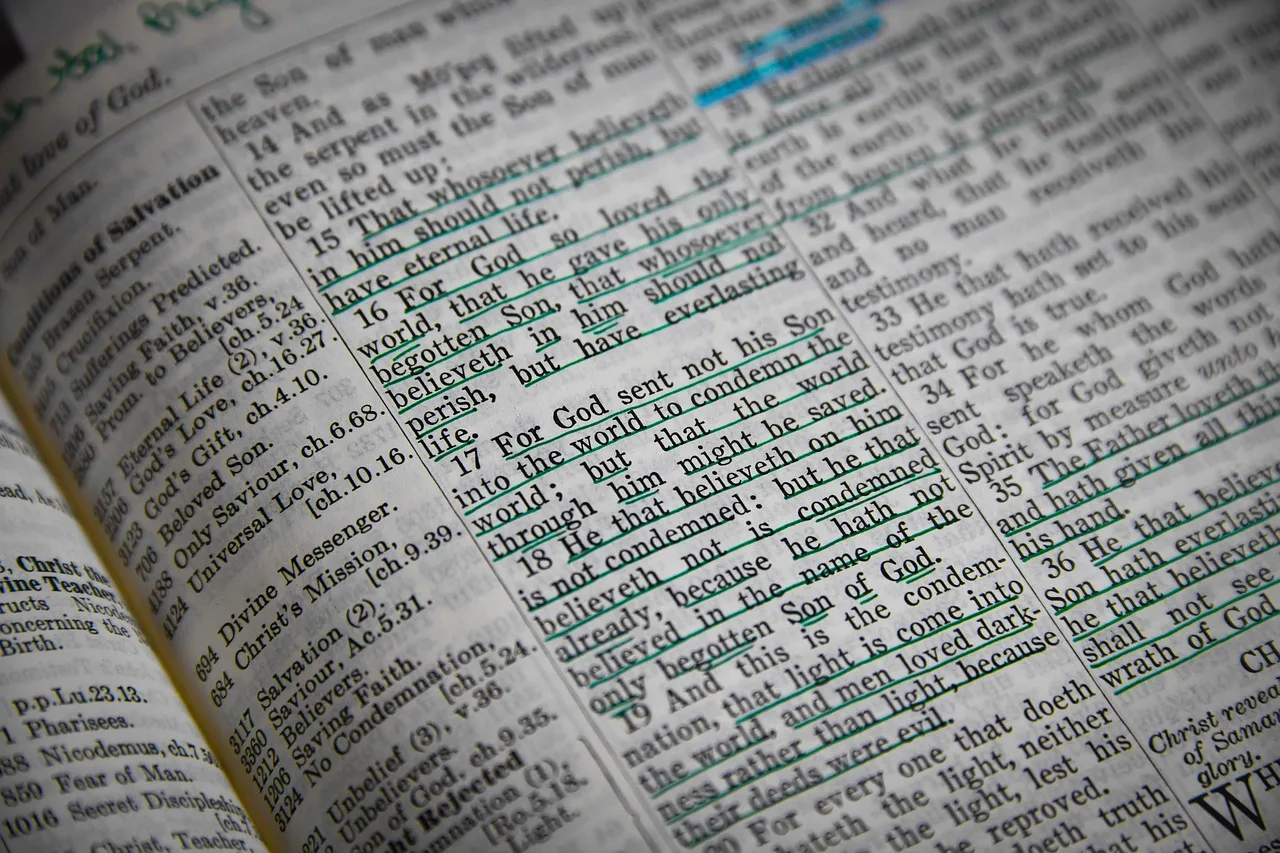
1 Timothy 2:1 (NIV)
"I urge, then, first of all, that petitions, prayers, intercession and thanksgiving be made for all people."
Paul begins his instructions to Timothy with the first priority of gathered prayer: intercession for all people. The word "first" (proton) signals this is not optional or secondary. The four terms he uses — petitions, prayers, intercession, thanksgiving — describe a complete vocabulary of prayer covering every posture from desperate need to grateful acknowledgment.
Ephesians 6:18 (ESV)
"Praying at all times in the Spirit, with all prayer and supplication. To that end, keep alert with all perseverance, making supplication for all the saints."
This verse closes Paul's teaching on the Armor of God. After listing every piece of defensive and offensive spiritual equipment, he identifies the animating force: prayer. "All the saints" means the entire church community — not just close friends or those you agree with.
Numbers 6:24–26 (NIV)
"The LORD bless you and keep you; the LORD make his face shine on you and be gracious to you; the LORD turn his face toward you and give you peace."
The Aaronic Blessing is the oldest intercessory prayer in Scripture, given by God himself as the words Aaron should pronounce over Israel. It is not a human creation — God explicitly says "This is how you are to bless the Israelites" (v.23). It remains in liturgical use in Jewish, Catholic, Protestant, and Orthodox worship.
Romans 8:26–27 (NIV)
"In the same way, the Spirit helps us in our weakness. We do not know what we ought to pray for, but the Spirit himself intercedes for us through wordless groans. And he who searches our hearts knows the mind of the Spirit, because the Spirit intercedes for God's people in accordance with the will of God."
Paul identifies a form of intercession that operates beyond human language. When prayer feels impossible — in grief, in exhaustion, in confusion — the Spirit steps in. This verse is foundational for understanding prayer not as a human performance but as a trinitarian activity: the Spirit intercedes, the Father searches hearts, and the believer simply shows up.
Job 42:10 (NIV)
"After Job prayed for his friends, the LORD restored his fortunes and gave him twice as much as he had before."
This single verse closes the narrative of Job's suffering. God's restoration does not come when Job argues his case or protests his innocence — it comes when Job prays for the very friends who added to his pain. Intercessory prayer, in this account, is the turning point of Job's own healing.
5. Verses About Evening and Morning Prayer
Scripture does not mandate a single time for prayer, but it models both morning and evening rhythms as the natural boundaries of a prayerful day.
For a dedicated guide to evening prayer practice, see How to Build an Evening Prayer Routine.
Psalm 5:3 (NIV)
"In the morning, LORD, you hear my voice; in the morning I lay my requests before you and wait expectantly."
David frames morning prayer as both speech and silence — he speaks his requests and then waits. The Hebrew verb for "wait expectantly" (tsaphah) means to watch carefully, like a lookout scanning the horizon. Morning prayer is not a monologue; it opens a posture of attentiveness for the whole day.
Psalm 141:2 (ESV)
"Let my prayer be counted as incense before you, and the lifting up of my hands as the evening sacrifice."
This evening psalm uses sacrificial imagery to frame prayer as worship. In the temple system, incense was burned morning and evening. The psalmist asks that his prayer — offered at the same hour — carry the same weight. Lifting hands in the evening was a recognized gesture of surrender and petition.
Daniel 6:10 (NIV)
"Now when Daniel learned that the decree had been published, he went home to his upstairs room where the windows opened toward Jerusalem. Three times a day he got down on his knees and prayed, giving thanks to his God, just as he had done before."
Daniel's three-times-daily prayer is an act of civil courage — the decree he is defying was designed to stop him. His posture (kneeling), direction (toward Jerusalem), and constancy ("just as he had done before") reveal prayer that is already habitual, not reactive. For a look at how this kind of morning rhythm can anchor your day, see How to Build a Morning Prayer Routine.
Mark 1:35 (NIV)
"Very early in the morning, while it was still dark, Jesus got up, left the house and went off to a solitary place, where he prayed."
This is the earliest record of Jesus' private prayer practice. He had just spent the previous day healing the sick and casting out demons (Mark 1:21–34). Before a new day of ministry begins, he withdraws. The pattern — full days of outward service, anchored by private morning prayer — is consistent throughout Mark's Gospel.
Psalm 63:6–7 (NIV)
"On my bed I remember you; I think of you through the watches of the night. Because you are my help, I sing in the shadow of your wings."
David wrote Psalm 63 during the flight from Absalom — a night of real danger. His nighttime reflection is not insomnia; it is meditation. The Hebrew hāgāh (think, meditate) describes an active, murmuring contemplation. Evening prayer, in this model, moves between memory, trust, and quiet praise.
6. Verses About Answered Prayer
Scripture is honest about the gap between asking and receiving. These verses address answered prayer without minimizing the mystery that surrounds it.
For a deeper look at the most studied model of answered prayer, see The Lord's Prayer: Full Meaning and Explanation.
Jeremiah 33:3 (NIV)
"Call to me and I will answer you and tell you great and unsearchable things you do not know."
God speaks this promise directly to Jeremiah while he is imprisoned. The "great and unsearchable things" (betsuroth — hidden, inaccessible things) suggest that answered prayer is not just about having needs met. God promises revelation — insight and knowledge that prayer makes available and that no other means could provide.
Matthew 6:6 (NIV)
"But when you pray, go into your room, close the door and pray to your Father, who is unseen. Then your Father, who sees what is done in secret, will reward you."
Jesus teaches this in the Sermon on the Mount as a corrective to performative public prayer. The "reward" he promises is not wealth or even a specific answer — it is the Father seeing you. The intimacy of that private encounter is itself the answered prayer.
Psalm 34:17–18 (NIV)
"The righteous cry out, and the LORD hears them; he delivers them from all their troubles. The LORD is close to the brokenhearted and saves those who are crushed in spirit."
This is one of the most widely quoted psalms in pastoral care contexts. The two types of people God specifically attends to — the brokenhearted and the crushed in spirit — are not the successful or the righteous in a legal sense. God's proximity in prayer is highest at the point of greatest human vulnerability.
Isaiah 65:24 (NIV)
"Before they call I will answer; while they are still speaking I will hear."
This verse from the prophetic section of Isaiah describes God's relationship to his restored people. It pushes answered prayer beyond the transactional model entirely: God begins responding before the sentence is finished. This does not make asking unnecessary — it reveals the intimacy of the relationship prayer is built on.
2 Chronicles 7:14 (NIV)
"If my people, who are called by my name, will humble themselves and pray and seek my face and turn from their wicked ways, then I will hear from heaven, and I will forgive their sin and will heal their land."
This is God's response to Solomon's dedication of the temple. The four conditions — humility, prayer, seeking, repentance — are not a formula for manipulation but a description of genuine return. Answered prayer, in this context, is bound to a relational posture, not a transaction. The ACTS prayer framework explores how these movements work in daily practice — see The ACTS Prayer Method Explained.
FAQ
How many verses about prayer are in the Bible?
The NIV Exhaustive Concordance counts over 375 references to forms of "pray" across both testaments — including "prayed" (68×), "prayer" (106×), "prayers" (32×), "praying" (36×), and "prays" (12×). That count does not include indirect references or psalms that function as prayers without using the word.
What does the Bible say is the most important thing about prayer?
Jesus emphasizes relationship over ritual most consistently. Matthew 6:6 (NIV) frames answered prayer as the result of private, sincere communication with the Father — not public performance. Across traditions, this is the agreed foundation.
What Bible verse says to pray without ceasing?
1 Thessalonians 5:17 (NIV) — "Pray continually." This two-word verse (one word in Greek: adialeiptos) is the most compact prayer command in Scripture. It describes an ongoing orientation toward God underlying all daily activity.
What is the difference between prayer and intercession in the Bible?
Prayer is the broad category; intercession is one type within it. In 1 Timothy 2:1 (NIV), Paul lists "petitions, prayers, intercession and thanksgiving" as distinct postures — suggesting that intercession specifically means standing in the gap on behalf of another person rather than bringing your own needs to God.
Does the Bible promise that all prayers will be answered?
No — not unconditionally. The consistent qualifier across multiple passages is alignment with God's will. 1 John 5:14 (NIV) says God hears us "if we ask anything according to his will." James 4:3 (NIV) explains that some prayers go unanswered because the motive behind them is self-serving. Scripture promises attentiveness and relationship, not automatic fulfillment.
What is the Lord's Prayer and where is it in the Bible?
The Lord's Prayer appears in Matthew 6:9–13 (the Sermon on the Mount version) and Luke 11:2–4 (a shorter teaching version). Jesus gives it in response to the disciples' request "Lord, teach us to pray." For a detailed breakdown, see The Lord's Prayer: Full Meaning and Explanation.
What Bible verses talk about praying for others?
Key intercessory prayer verses include 1 Timothy 2:1 (NIV), Ephesians 6:18 (ESV), Romans 8:26–27 (NIV), and the Aaronic Blessing of Numbers 6:24–26 (NIV). Job 42:10 is notable because Job's restoration comes specifically in the moment he prays for others, not for himself.
Is there a biblical pattern for when to pray?
The Bible does not command a single schedule, but it models consistent patterns. Daniel prayed three times daily (Daniel 6:10). Psalm 5:3 describes morning prayer. Psalm 141:2 frames an evening ritual. Mark 1:35 shows Jesus praying before dawn. The ACTS Prayer Method and How to Pray guides offer practical frameworks for structuring daily prayer time.
About the Author
Julien is a contributing writer at Bible Expert with a background in biblical studies and pastoral ministry. She focuses on devotional content, prayer practices, and scripture application for everyday life.
📱 Read the Bible anywhere with Bible Expert 1,200+ translations, audio Bible, and AI Bible Chat — free. iPhone / iPad · Mac · Android · Windows · Other device