
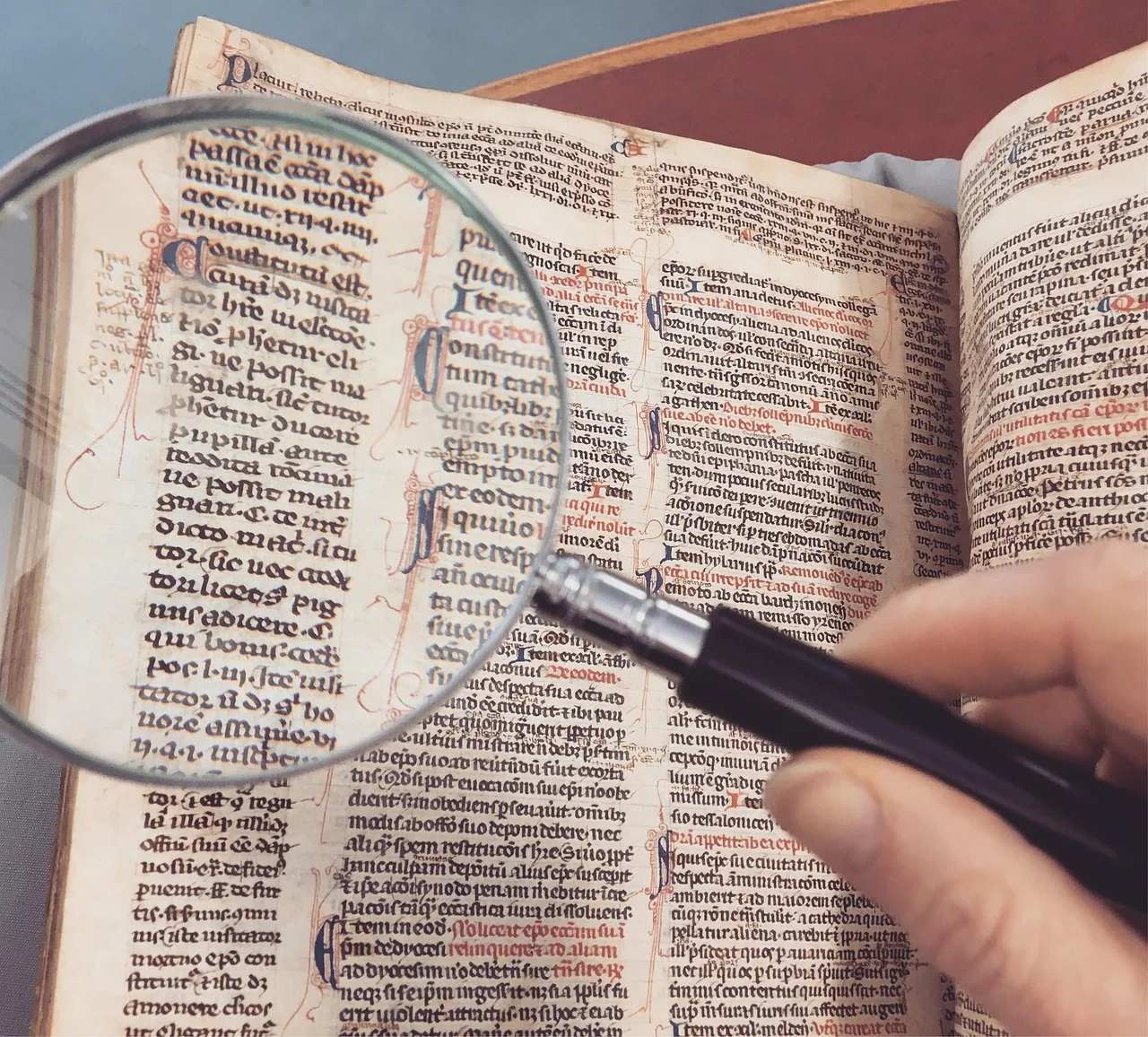
It is one of the most important questions a person can ask — and one of the most complicated to answer well. "How do we know the Bible is true?" sounds like a single question, but it contains at least three very different ones: Is it historically accurate? Is it theologically reliable? Is it spiritually true? Each of those questions requires a different kind of inquiry and admits a different kind of answer.
This guide takes the question seriously enough to examine it honestly. We'll look at what archaeology and manuscript evidence actually show, what fulfilled prophecy does and doesn't prove, and — most importantly — why thoughtful Christians across two millennia have found the Bible trustworthy even when historical confirmation runs out. This isn't apologetics designed to overwhelm objections; it's an honest map of the terrain.
Key Takeaways
- "The Bible is true" means different things depending on whether you are asking about historical accuracy, theological reliability, or spiritual authority — and the evidence for each differs.
- The New Testament is supported by over 5,800 Greek manuscripts, more than any other ancient literary text — giving scholars high confidence in the transmitted text.
- Archaeological discoveries have confirmed hundreds of specific details in the Bible — places, rulers, customs — but archaeology also raises questions about some narratives.
- Fulfilled prophecy is a significant argument for many believers, though scholars debate what counts as fulfillment and how to handle predictive vs. retrospective dating.
- The Catholic and Orthodox traditions ground biblical trustworthiness partly in the Church's role: Scripture was formed by a community of faith and is best read within one.
- Most academic biblical scholars — including many believing Christians — distinguish between historical-critical questions (what happened?) and theological questions (what does it mean?).
- The Council on Biblical Inerrancy (Chicago Statement, 1978) and Vatican II's Dei Verbum (1965) offer two major formal statements on biblical truth from different Christian traditions.
- Honest engagement with the Bible's difficulties is, historically, a mark of serious faith — not a threat to it.
What Do We Even Mean When We Ask If the Bible Is "True"?
Before answering the question, it's worth being precise about what we're asking. The word "true" carries at least three distinct meanings in this context:
Historical truth means that the events described actually happened — specific people did specific things in specific places at specific times. This is the domain of archaeology, ancient documents, and historical methodology.
Theological truth means that the Bible's core claims about God, humanity, sin, redemption, and eternal life are reliable and authoritative — that what the Bible says about how God relates to the world is correct.
Spiritual truth means that reading Scripture produces genuine encounter with God — that the Bible is not merely ancient literature but a living word that shapes, corrects, and transforms those who receive it.
These three types of truth are related but not identical. You can accept the theological and spiritual trustworthiness of the Bible while acknowledging that not every historical detail can be independently confirmed. Conversely, even atheist historians can acknowledge that the Bible accurately describes certain ancient customs — without granting any of its theological claims.
Most of the sharpest disagreements about the Bible come from people talking past each other across these three categories. Apologetic arguments tend to focus on historical evidence; critics tend to focus on historical problems; and people of deep faith tend to speak from personal spiritual encounter — and each group sometimes talks as if their evidence settles the whole question.
It doesn't. Let's look at each type of evidence honestly.
What Does Archaeological Evidence Actually Show?
The past century of archaeology in the ancient Near East has produced an extraordinary record of biblical confirmation. Sites, rulers, customs, and events described in Scripture have been independently verified through excavation and ancient records. A few examples:
The Hittites were once dismissed by skeptics as a biblical invention — they appeared in Genesis and other books but no outside evidence existed. In the 19th and 20th centuries, archaeologists uncovered the Hittite capital Hattusa (in modern Turkey) along with thousands of texts, confirming an empire of exactly the kind the Bible describes.
Pontius Pilate was long attested only in the New Testament and in Josephus. In 1961, a Latin inscription found at Caesarea Maritima — the "Pilate Stone" — confirmed his title as praefectus of Judea under Tiberius, exactly as the Gospels presuppose.
The Pool of Bethesda (John 5) was dismissed by some critics as a legendary invention until excavations near the Church of Saint Anne in Jerusalem revealed a first-century pool with five porticoes — matching John's description precisely.
King David was considered by some minimalist historians to be a legendary figure until the 1993 discovery of the Tel Dan Stele — a 9th century BCE Aramaic inscription referring to the "House of David," providing the first direct archaeological evidence for the Davidic dynasty outside the Bible.
Citation capsule: Bible Odyssey, published by the Society of Biblical Literature, notes that archaeology has confirmed many details found in the Bible — place names, personal names, cultural practices, and chronological data — while also complicating some narratives, particularly those involving the Exodus and the conquest of Canaan.
This is a fair summary of where the evidence stands. Archaeology is not a simple "the Bible is confirmed" or "the Bible is disproved" story. Much is confirmed; some is complicated or unverified; a few narratives remain subjects of active scholarly debate.
 *The manuscript tradition behind the Bible is among the most thoroughly documented of any ancient text in history.*
How Reliable Are the Biblical Manuscripts?
One of the strongest arguments for the Bible's reliability is the sheer quantity and quality of its manuscript tradition — particularly for the New Testament.
Over 5,800 Greek manuscripts of the New Testament survive, ranging from tiny papyrus fragments to complete codices. The earliest surviving fragment — P52 (the John Rylands Papyrus) — contains a few verses from John 18 and dates to approximately 125 CE, within a generation or two of the Gospel's composition. For comparison, we have only 7 surviving manuscripts of Plato's Republic, the earliest copied more than 1,200 years after Plato wrote. No ancient historian applies to Plato the skepticism sometimes applied to the New Testament.
The Dead Sea Scrolls, discovered between 1947 and 1956 at Qumran, pushed the oldest surviving Hebrew Bible manuscripts back by approximately a thousand years — from manuscripts dating to around 900 CE to manuscripts dating to 100–300 BCE. Comparison of the Great Isaiah Scroll (1QIsa^a) with the Masoretic Text used for most modern Old Testament translations shows remarkable stability over a millennium of copying, with only minor variations.
Textual scholars call the discipline of reconstructing the original text from surviving manuscripts textual criticism. The consensus of textual critics is that the New Testament text we have today is highly reliable — scholars are confident they can reconstruct the original wording in all but a small number of passages, and no major Christian doctrine hangs on any disputed passage.
Citation capsule: Bruce M. Metzger and Bart Ehrman's The Text of the New Testament (4th ed., Oxford University Press, 2005) — the standard seminary textbook on this subject — documents the 5,800+ Greek manuscripts and concludes that the manuscript tradition gives scholars substantial confidence in reconstructing the original text. The Center for the Study of New Testament Manuscripts (CSNTM) continues to digitize manuscripts and update these figures.
Manuscript reliability answers a specific question: do we have what the original authors wrote? It does not, by itself, answer whether what the authors wrote is true. The two questions must be kept distinct.
Does Fulfilled Prophecy Prove the Bible Is True?
Fulfilled prophecy is one of the most frequently cited arguments for biblical reliability, and it deserves careful treatment.
The Old Testament contains hundreds of passages that Christians read as predictions fulfilled in Jesus Christ — the suffering servant of Isaiah 53, the birth in Bethlehem (Micah 5:2), the entry on a donkey (Zechariah 9:9), the thirty pieces of silver (Zechariah 11:12-13), and many more. For many believers, the precision and number of these fulfillments is overwhelming evidence that the Bible is of divine origin.
This argument carries genuine force, especially for the New Testament authors themselves, who consistently appeal to it. The Gospel of Matthew alone records fourteen explicit quotations from the Old Testament as being fulfilled in Jesus.
Academic biblical scholarship, however, introduces several qualifications:
The dating problem. If a book like Daniel was written after the events it "predicts" (a position held by most critical scholars), then those "prophecies" are not predictive at all. Believers who regard Daniel as 6th-century writing see things differently from scholars who date it to the 2nd century BCE.
The fulfillment definition problem. Some Old Testament passages cited as messianic prophecies in the New Testament were not clearly predictive in their original context — the New Testament authors are sometimes doing a creative theological reading of prior Scripture (called midrash or typology) rather than straightforward fulfillment of a clear prediction.
The selection problem. It is easier to find "fulfillments" after the fact. The hundreds of passages that don't seem to have been fulfilled, or were fulfilled differently than expected, receive less attention.
None of this means fulfilled prophecy proves nothing. For many thoughtful Christians, even after accounting for all these qualifications, the coherence of the Old Testament witness to Christ remains remarkable. It is one of the most intellectually interesting aspects of the biblical canon. But it is evidence to weigh carefully, not a knock-down proof.
What Is the Church's Role in Biblical Truth?
This question — which many modern Protestants skip — was considered fundamental by the early church and remains central to Catholic and Orthodox theology.
The Second Vatican Council's dogmatic constitution Dei Verbum (1965) states that "sacred tradition, sacred Scripture, and the teaching authority of the Church" are so linked that "one cannot stand without the others" (Vatican.va, dei-verbum). This is not a claim that the Church invented Scripture or stands above it — it is a claim that Scripture emerged from within the community of faith and is best understood from within that same community.
This matters for the question of how we know the Bible is true: for Catholics and Orthodox Christians, part of the answer is that the Church — guided by the Holy Spirit — has received, preserved, discerned, and transmitted Scripture as trustworthy for 2,000 years. That ongoing witness of the community of faith is itself evidence of a kind.
The Protestant Reformation reshaped this framework. For Lutheran, Reformed, Baptist, and Evangelical traditions, sola scriptura places Scripture above tradition as the supreme authority. But even Protestant theologians acknowledge that the early church's decisions about which books belong in the canon — decisions made through councils and consensual processes that were not purely individual — play a role in why Protestants read the books they do.
 *The testimony of believers who have found the Bible transforming and reliable across 2,000 years is itself a form of evidence for its truth.*
What Is the Difference Between Historical Truth and Theological Truth?
This is perhaps the most important distinction in the whole discussion.
The historical-critical method — used by scholars in seminaries and universities across all traditions — examines the Bible as a historical document: when was it written, by whom, in what literary genre, for what audience, against what cultural background? This method has produced enormous insights into the Bible's human dimension. It has also raised genuine historical questions about specific narratives.
Theological reading, by contrast, asks what the text means — what it reveals about God, humanity, and salvation. These questions are not settled by archaeology or manuscript counts. They are questions of interpretation, faith, and community.
The Catholic tradition's Dei Verbum distinguishes the "saving truth" of Scripture from the claim that every statement in the Bible is scientifically or historically accurate in a modern sense. The document affirms that Scripture teaches "firmly, faithfully and without error that truth which God wanted put into the sacred writings for the sake of our salvation" — not every incidental historical or scientific detail.
Evangelical statements like the 1978 Chicago Statement on Biblical Inerrancy affirm that Scripture is "without error or fault in all its teaching, no less in what it states about God's acts in creation, about the events of world history, and about its own literary origins." This is a broader claim, and it has been debated vigorously within Evangelical scholarship.
Understanding which claim you are making — and which question you are answering — is the key to productive conversation about the Bible's truth.
What Is the Strongest Evidence That the Bible Is True?
Asked to distill the evidence, thoughtful biblical scholars and theologians across traditions tend to point to a convergence of multiple factors — none of which is decisive alone:
- Textual stability: The manuscript tradition, especially for the New Testament, gives us high confidence we have what was originally written.
- Archaeological confirmation: Hundreds of verifiable details across both Testaments have been independently confirmed.
- Internal coherence: A library written by dozens of authors over 1,500 years maintains a coherent narrative arc — creation, fall, covenant, redemption, consummation — that is either remarkable coincidence or the result of a unifying divine purpose.
- Transformative power: The testimony of millions of people, across all cultures and centuries, who report that engaging seriously with Scripture has changed them — in observable ways — is not nothing. It is a form of evidence, even if it is not scientific evidence.
- The resurrection: For Christians, the historical question of the resurrection is central. If Jesus rose from the dead, then his authority to affirm the Scriptures ("the Scriptures cannot be broken," John 10:35, NIV) carries enormous weight. If he did not, Paul himself says "our faith is futile" (1 Corinthians 15:17, NIV). The resurrection is the pivotal historical claim on which everything turns.
For a deeper exploration of how biblical accuracy has been examined over time, see our article on whether the Bible is historically accurate, and for the foundational method of approaching these texts, our guide to how to study the Bible explains both critical and devotional approaches.
What About the Parts That Are Hard to Believe?
Honest engagement with this question requires acknowledging that the Bible contains passages that are difficult — historically, morally, and scientifically. The conquest narratives in Joshua, the apparent endorsement of slavery in certain epistles, the six-day creation, the global flood, the various miracle accounts — these are not easily harmonized with modern knowledge in every instance.
Different traditions handle these passages differently. Some hold to a strict literal reading in all cases. Others apply historical-critical analysis to understand the genre and context — recognizing, for example, that ancient Near Eastern creation accounts use different literary conventions than modern scientific texts. Still others treat certain narratives as theological truth expressed through historically-shaped forms that may not be intended as precise factual records.
What the tradition consistently affirms, from Augustine to Aquinas to Luther to modern scholars, is that intellectual honesty about difficulties is itself a form of faithfulness. Augustine wrote in the 4th century that if a biblical interpreter finds a reading that conflicts with well-established fact, "it will be found that what was said has been said with truth" — not by ignoring the difficulty, but by going deeper into it.
The Bible rewards careful reading. It rarely rewards either glib proof-texting or reflexive dismissal.
FAQ
How do we know the Bible is historically accurate?
Archaeological discoveries have confirmed hundreds of specific places, rulers, customs, and events mentioned in the Bible — including the existence of King David (Tel Dan Stele), Pontius Pilate (Pilate Stone), and the Pool of Bethesda (excavated in Jerusalem). Manuscript evidence also shows the biblical text has been transmitted with high reliability. However, some biblical narratives remain unverified or are subjects of scholarly debate; archaeology does not uniformly confirm every claim.
Is the Bible the most historically reliable ancient text?
In terms of manuscript evidence, the New Testament is unmatched among ancient texts: over 5,800 Greek manuscripts survive, with the earliest dating to within decades of the original writings. For comparison, classical works like Caesar's Gallic Wars or Plato's dialogues survive in far fewer, much later manuscripts, yet scholars do not doubt their general reliability. The Old Testament's textual stability was confirmed by the Dead Sea Scrolls.
What is the difference between biblical inerrancy and biblical infallibility?
Inerrancy — the view held by many Evangelical scholars (and formally stated in the 1978 Chicago Statement) — means the Bible is without error in everything it affirms, including historical and scientific matters. Infallibility — often used in Catholic and mainline Protestant theology — means the Bible is unfailing in achieving its purpose: reliably teaching what is necessary for salvation, even if incidental historical or scientific details may reflect the limited knowledge of their time. These are related but distinct claims.
Does fulfilled prophecy prove the Bible is divine?
Fulfilled prophecy is one of the strongest arguments for biblical reliability and is frequently cited by Christians across all traditions. Academic biblical scholars introduce qualifications around dating, genre, and the definition of "fulfillment." For many believers, even after these qualifications, the coherence of Old Testament prophecy and New Testament fulfillment remains powerfully persuasive.
Can you believe the Bible is true without being able to prove it historically?
Yes — and most Christians throughout history have done so. Historical evidence for the Bible is real and significant, but the grounds for Christian faith have never been purely historical. Theological reasoning, the witness of the Church, personal encounter with Scripture, and the interior testimony of the Holy Spirit (what Reformed theology calls the testimonium Spiritus Sancti internum) all function as grounds for Christian trust in Scripture — independent of historical proofs.
What do biblical scholars say about the truth of the Bible?
Academic biblical scholars range from committed believers to atheists, and their views on biblical truth vary accordingly. What most scholars share — across belief systems — is high confidence in the textual reliability of the manuscripts and appreciation for the historical value of many biblical narratives. Where scholars diverge most sharply is on theological claims (did God speak? did miracles occur?) and on historical-critical questions about specific narratives.
Reading the Bible With These Questions in Mind
If you're wrestling with the Bible's truth, the best thing you can do is read it seriously — not through someone else's proof-texts, but in its own terms, across its full range. Bible Expert's AI Bible Chat lets you ask interpretive questions, explore 3,751 translations, and follow any passage from its original language to its theological meaning.
For related questions about the Bible's origins and transmission, our common Bible questions FAQ covers when the Bible was written, who decided what went in, and how many manuscripts exist.
The question "how do we know the Bible is true?" has occupied the brightest minds in human history. It deserves more than a quick answer — and more than a quick dismissal. Sit with it. Read the text. Follow where the evidence leads, and follow where the Spirit leads. The two, Christians have found for two thousand years, point the same direction.
Julien is a Bible educator and content writer at Bible Expert. She holds that intellectual honesty and deep faith are not opposites — and that the questions most people are afraid to ask are often the ones that lead to the most durable faith.
📱 Read the Bible anywhere with Bible Expert 3,751 translations, audio Bible, and AI Bible Chat — free. iPhone / iPad · Mac · Android · Windows · Other device