
Every year on August 15, hundreds of millions of Catholics around the world observe one of the most solemn feasts of the liturgical calendar — the Assumption of the Blessed Virgin Mary. Eastern Orthodox and Eastern Catholic Christians observe a closely related feast, the Dormition of the Theotokos, usually on the same date. Protestant and Evangelical Christians, for the most part, observe nothing at all — because they regard the event the feast commemorates as unscriptural.
What exactly is the Assumption? When did it become official Catholic teaching? How does it differ from the Orthodox Dormition? And what do Scripture and tradition actually say about Mary's end of life? This guide walks through each tradition's position — fairly, and without advocating for any single view.
Key Takeaways
- The Assumption of Mary is the Catholic doctrine that at the end of her earthly life, the Virgin Mary was taken — body and soul — into heavenly glory.
- It was defined as a dogma of the Catholic Church by Pope Pius XII in the apostolic constitution Munificentissimus Deus on November 1, 1950 — making it one of the most recent Catholic dogmatic definitions.
- The definition deliberately left open whether Mary died before being assumed or was assumed alive; the dogma covers both possibilities.
- The Dormition of the Theotokos is the Eastern Orthodox celebration of Mary's "falling asleep" (death) and being taken bodily to heaven; it is a feast of the highest rank, observed on August 15 (or August 28 in some Old Calendar parishes).
- Protestant and Evangelical Christians generally do not accept the Assumption as a doctrinal truth, arguing it lacks explicit scriptural support.
- August 15 is a public holiday in many predominantly Catholic countries, including France, Italy, Spain, Portugal, Poland, and many Latin American nations.
- Devotion to Mary's bodily assumption dates to at least the 4th–5th centuries in both East and West — centuries before it became a formal dogma.
What Is the Assumption of Mary?
The Catholic doctrine of the Assumption holds that the Virgin Mary, having completed her earthly life, was taken up — assumed — body and soul into heavenly glory. The Latin term is Assumptio Mariae (the taking up of Mary).
Pope Pius XII formally defined the dogma in his apostolic constitution Munificentissimus Deus ("The Most Bountiful God"), issued on November 1, 1950, after a lengthy consultation of bishops worldwide. The definition reads:
"We pronounce, declare and define it to be a divinely revealed dogma: that the Immaculate Mother of God, the ever Virgin Mary, having completed the course of her earthly life, was assumed body and soul into heavenly glory." — Munificentissimus Deus, §44 (Vatican.va)
Notice that the definition says "having completed the course of her earthly life" — not "having died." This wording was intentional. Catholic theologians have long debated whether Mary died before being assumed (the majority view) or whether she was assumed alive without dying. The 1950 definition deliberately leaves both possibilities open, defining only the fact of her bodily assumption, not the precise manner.
The Catholic Church does not require belief in exactly how the Assumption happened — only that it happened. Because Mary was uniquely associated with the redemptive mission of Christ — as Theotokos (God-bearer) and as one preserved from original sin by the Immaculate Conception — Catholic theology argues it is fitting that she should share in the resurrection of the body in a way that anticipates what awaits all the faithful at the end of time.
Citation capsule: The USCCB explains that the Assumption "is a singular participation in her Son's Resurrection and an anticipation of the resurrection of other Christians." The feast on August 15 is one of only six Holy Days of Obligation in the United States (USCCB, Holy Days of Obligation).
What Is the Dormition of the Theotokos?
Eastern Orthodox Christians observe the feast of the Dormition of the Theotokos (Greek: Koimesis tes Theotokou; Slavonic: Uspenie) on August 15 according to the Revised Julian Calendar, or August 28 in parishes using the Old (Julian) Calendar. It is one of the Twelve Great Feasts of the Orthodox liturgical year — the highest rank of feast after Pascha (Easter).
"Dormition" comes from the Latin dormitio, meaning "falling asleep" — a poetic way of describing death in early Christian usage. The feast commemorates Mary's death, the gathering of the Apostles miraculously brought to her bedside, and her being taken bodily to heaven by Christ himself.
Orthodox theology does not use the language of "assumption" (a Western term), nor does it define the Dormition as a dogma in the same juridical sense as Roman Catholic dogmas. It is, rather, a received tradition of the Church — witnessed liturgically, iconographically, and in the writings of the Church Fathers. The Orthodox Church in America's page on the Dormition affirms that Mary was glorified in body and soul — sharing in the resurrection of her Son in a way that anticipates the resurrection of all the faithful.
The classic Dormition icon shows Christ standing at Mary's deathbed, holding a small white figure — her soul — in swaddling clothes, mirroring the Nativity iconography in reverse. The Apostles surround her body; angels receive her soul. The theological symmetry is deliberate: she who bore Christ is now borne by him.
Key distinctions from the Catholic Assumption:
| Catholic Assumption | Orthodox Dormition | |
|---|---|---|
| Status | Defined dogma (1950) | Received tradition (no formal dogmatic definition) |
| Did Mary die? | Left open by definition | Generally affirmed (she died, then was raised) |
| Focus | Bodily glorification | Death, resurrection, and entrance into heaven |
| Feast rank | Solemnity / Holy Day of Obligation | One of the Twelve Great Feasts |
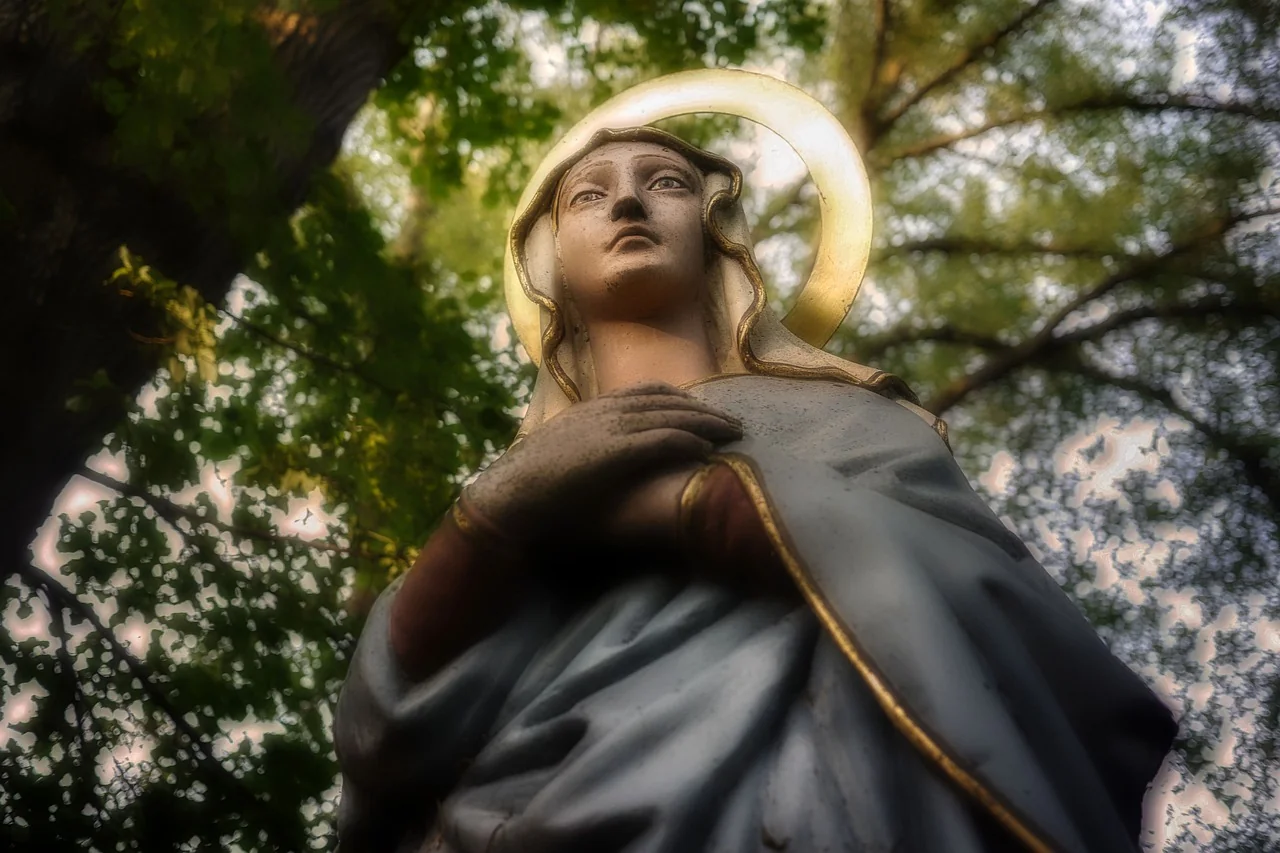 *Marian iconography has expressed devotion to Mary's bodily glorification in both Eastern and Western Christianity for over 1,500 years.*
What Does the Bible Say About the Assumption?
This is the question that most directly divides Catholic and Orthodox Christians from Protestant ones. The honest answer: the Bible does not explicitly describe the Assumption or Dormition of Mary anywhere. No New Testament passage narrates Mary being taken to heaven. This is the starting point of Protestant and Evangelical objections.
Catholic and Orthodox theologians typically respond with several arguments:
1. Argument from fittingness (theological reasoning). If Christ took on flesh through Mary — the Incarnation — then it is fitting that the same flesh should share in his glorification. Mary's unique role as Theotokos (Mother of God) makes her bodily assumption theologically coherent as a consequence of her Son's resurrection.
2. Argument from tradition. The Assumption/Dormition is one of the oldest continuous traditions in Christianity. The earliest texts describing Mary's death and glorification — sometimes called the Transitus Mariae (Passing of Mary) literature — date to approximately the 4th century. The feast itself appears in Eastern liturgical calendars no later than the 5th–6th centuries. For Catholic and Orthodox Christians, the ancient and universal witness of tradition carries authoritative weight alongside Scripture.
3. Argument from analogy. The Old Testament records Enoch being "taken by God" (Genesis 5:24) and Elijah being taken up to heaven in a whirlwind (2 Kings 2:11) — bodily assumptions by figures who had not yet died in ordinary ways. If God took the prophet Elijah bodily, Catholic reasoning asks, why not also the Mother of God?
Protestant objections center on the Reformation principle of sola scriptura — Scripture alone is the final authority for Christian doctrine. Because no biblical text narrates the Assumption, Protestants generally hold that it cannot be required belief. The silence of the New Testament about Mary's end of life is, for many Evangelicals, decisive. Moreover, defining the Assumption as a dogma in 1950 — nearly 2,000 years after the events — strikes many Protestants as an addition to the faith without sufficient warrant.
Citation capsule: Encyclopedia Britannica's article on the Assumption notes there is no direct mention of this doctrine in the New Testament. Catholic and Orthodox proponents ground it in typological reading of Scripture (Revelation 12, Genesis 3:15), theological reasoning about Mary's unique role, and unbroken liturgical tradition from the 6th century onward.
Who Believes the Assumption, and Who Does Not?
Roman Catholics (1.3 billion Christians): Required belief. The 1950 dogmatic definition means all Catholics are bound to assent to the Assumption as a revealed truth of faith.
Eastern Orthodox (220–300 million Christians): The Dormition is one of the most beloved and important feasts of the Church. While not defined juridically as a dogma, it is universally celebrated and theologically affirmed. Orthodox theology does not separate "required belief" from liturgical tradition in the same way Western theology does.
Eastern Catholic Churches: These churches (Byzantine, Coptic Catholic, Maronite, etc.) are in full communion with Rome and celebrate the Dormition/Assumption in their own liturgical rites.
Lutherans: Martin Luther himself, though he rejected many Catholic Marian doctrines, retained devotion to Mary and never explicitly condemned the Assumption during his lifetime. Modern Lutheran churches vary — some retain Marian feasts, others have largely set them aside. The Assumption is not a confessional requirement.
Anglican/Episcopal: The liturgical calendar of many Anglican churches retains August 15 as the Feast of the Blessed Virgin Mary, though without requiring belief in bodily assumption as a doctrinal matter.
Protestant and Evangelical (Baptist, Reformed, Pentecostal, Methodist, etc.): Generally do not observe or affirm the Assumption. Sola scriptura reasoning leads most Protestant theologians to regard it as a pious tradition at best, an unwarranted addition at worst.
Why Does the Date August 15 Matter?
The feast of the Assumption on August 15 is one of the oldest Marian observances in the Christian liturgical calendar. Its origins are genuinely ancient — the feast is attested in Eastern liturgical sources by at least the late 5th century, and in Rome by the 7th century. Emperor Mauritius (582–602) formalized August 15 as the feast day for the Byzantine Empire.
In many countries, August 15 remains a public holiday — the Feast of the Assumption is a national holiday in France (where it has been since at least the Middle Ages), Italy, Spain, Portugal, Austria, Belgium, Greece, Poland, and most Latin American nations. In the United States, it is one of six Catholic Holy Days of Obligation, requiring Mass attendance.
The summer timing has also given the feast popular associations: in Mediterranean cultures, August 15 marks the mid-summer, when fields are blessed, flowers are brought to church, and fishing fleets are consecrated. The feast weaves Marian devotion into the rhythms of agricultural and communal life.
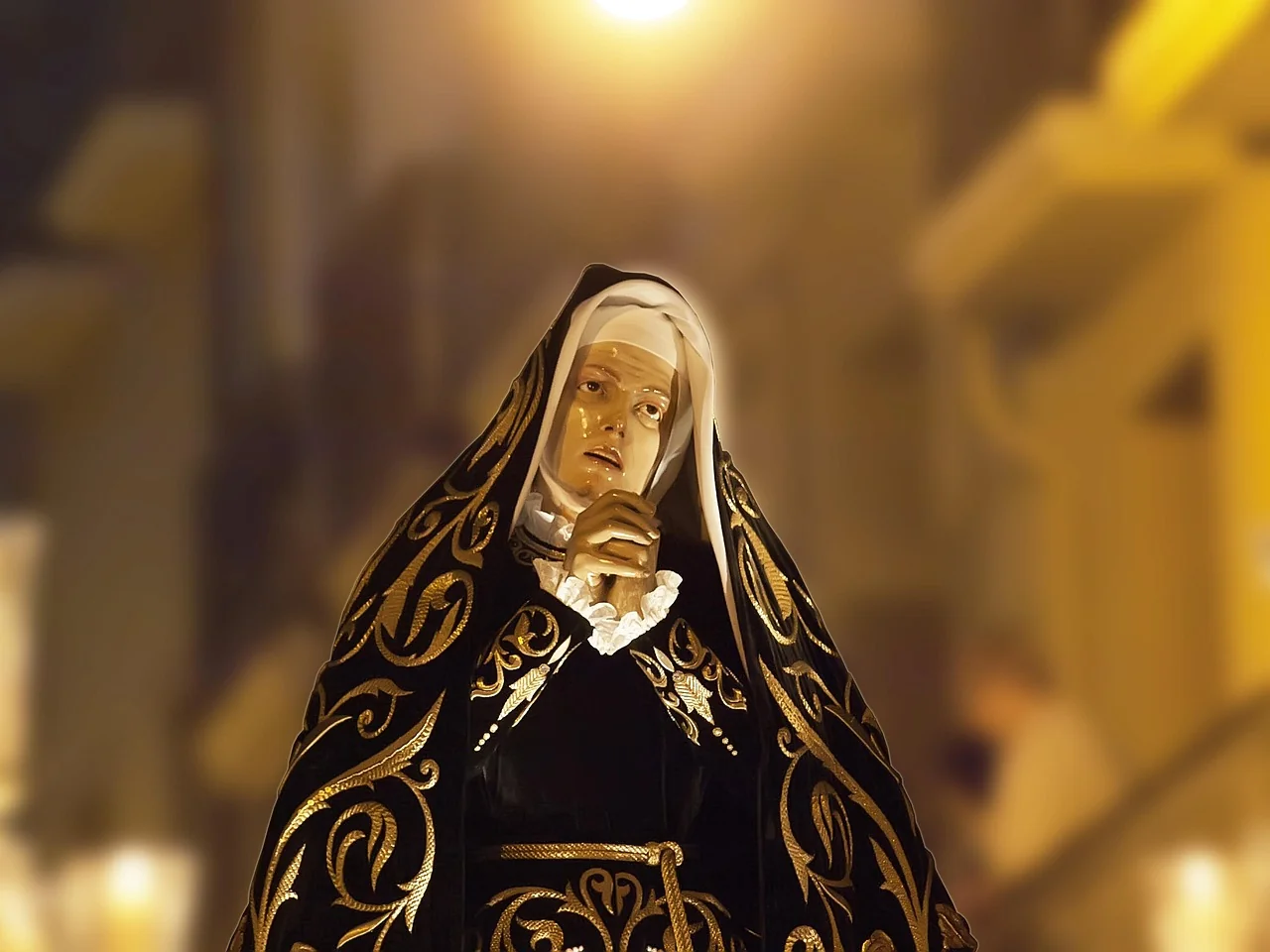 *The August 15 feast has shaped liturgical, cultural, and civic life in Catholic and Orthodox communities for over a millennium.*
Is the Assumption Connected to the Immaculate Conception?
For Catholic theology, yes — and deliberately so. The Immaculate Conception (defined as a dogma in 1854) holds that Mary was preserved from original sin from the moment of her conception. The Assumption (defined in 1950) can be understood as the logical completion: if Mary was preserved from the corruption of sin, it is fitting that she should also be preserved from the corruption of death and the grave.
Pope Pius XII's Munificentissimus Deus draws this connection explicitly, rooting the Assumption in Mary's unique role as Theotokos and in her intimate participation in Christ's redemptive work.
For Eastern Orthodoxy, the logic is similar but developed through different categories. Orthodox theology does not use the language of "Immaculate Conception" (which is specifically a Latin theological formulation) — but affirms that Mary was purified in preparation for bearing Christ, and that her Dormition and glorification flow from her unique relationship to the Incarnate Son.
Protestants generally reject both doctrines for the same reason: neither is explicitly taught in Scripture.
What Is the Difference Between Assumption and Resurrection?
A common question: if Mary was assumed body and soul into heaven, is this the same as the resurrection of the body?
Catholic and Orthodox theology answers: similar but not identical. The general resurrection — the resurrection of all the dead at the end of time — has not yet happened. Mary's bodily glorification is understood as an anticipation or firstfruits of that final resurrection, enabled by her unique association with Christ, who is himself "the firstfruits of those who have fallen asleep" (1 Corinthians 15:20, NIV).
This connects directly to the Christian understanding of what the Holy Spirit is and does: the same Spirit who raised Christ from the dead (Romans 8:11) is understood, in Catholic and Orthodox theology, to have glorified Mary in an anticipatory way.
FAQ
What is the Assumption of Mary in simple terms?
The Assumption of Mary is the Catholic belief that at the end of her earthly life, the Virgin Mary was taken body and soul into heaven. It was defined as Catholic dogma by Pope Pius XII in 1950. Eastern Orthodox Christians celebrate the same event as the Dormition — Mary's "falling asleep" and being taken to heaven by Christ.
Is the Assumption of Mary in the Bible?
No passage of the Bible explicitly narrates the Assumption or Dormition of Mary. Catholic and Orthodox Christians point to theological reasoning, ancient tradition, and indirect scriptural analogies (such as the assumption of Elijah in 2 Kings 2). Protestants, applying the principle of sola scriptura, generally hold that a doctrine not taught in Scripture cannot be required belief.
Did Mary die before the Assumption?
Catholic theology left this question open in the 1950 dogmatic definition. The majority Catholic theological view is that Mary did die before being assumed, but some theologians hold she was assumed alive. Eastern Orthodox theology more consistently affirms that Mary died — the feast is called the "Dormition" (falling asleep) — before being glorified bodily.
Why is August 15 a holiday in so many countries?
August 15, the Feast of the Assumption, is a public holiday in many historically Catholic countries (France, Italy, Spain, Portugal, Poland, and others) because the feast has been central to Catholic civic and liturgical life for over a thousand years. It is also one of the Twelve Great Feasts of Eastern Orthodoxy.
Do Protestants believe in the Assumption of Mary?
Generally no. Most Protestant and Evangelical Christians do not accept the Assumption as a doctrinal truth, because it is not explicitly taught in Scripture. Some Lutheran and Anglican churches retain Marian feasts on August 15 in a devotional sense without requiring belief in the bodily assumption.
What is the difference between the Assumption and the Dormition?
Both describe Mary's bodily glorification at the end of her life. "Assumption" is the Western (Catholic) term, emphasizing her being taken up. "Dormition" is the Eastern (Orthodox) term, emphasizing her "falling asleep" (death) and subsequent glorification. The theological content is very similar, though Catholic and Orthodox traditions have developed it in somewhat different frameworks.
When was the Assumption of Mary defined as dogma?
Pope Pius XII defined the Assumption as a dogma on November 1, 1950, in the apostolic constitution Munificentissimus Deus. This makes it one of the two most recent dogmatic definitions in Catholic history — the other being the Immaculate Conception, defined in 1854.
Exploring Mary in Scripture
If you want to read the New Testament passages about Mary — Luke 1–2, John 2, John 19, Acts 1:14 — alongside commentary from across the Christian traditions, Bible Expert's AI Bible Chat lets you explore any passage in 3,751 translations and ask questions drawn from Catholic, Orthodox, and Protestant perspectives. Understanding what the Gospel is and teaches is a helpful foundation for any study of Mary's role in salvation history — she is, in every tradition, defined in relation to Christ.
For a broader overview of questions like this, see our guide to common Bible questions answered. To understand how this fits into the full church calendar, see The Christian Liturgical Year Explained.
Whatever your tradition's position on the Assumption, August 15 is a moment when millions of Christians worldwide turn their attention toward Mary — and through her, toward her Son.
Julien is a Bible educator and content writer at Bible Expert. She has spent years studying how Catholic, Orthodox, and Protestant traditions approach shared figures like Mary, and believes that understanding each tradition's reasoning is the first step toward genuine dialogue.
📱 Read the Bible anywhere with Bible Expert 3,751 translations, audio Bible, and AI Bible Chat — free. iPhone / iPad · Mac · Android · Windows · Other device